Taurine is a conditionally essential amino acid naturally produced in the human body and concentrated in tissues like the heart, brain, and retina. Unlike most amino acids, taurine is not incorporated into proteins but instead serves diverse roles in cellular function.
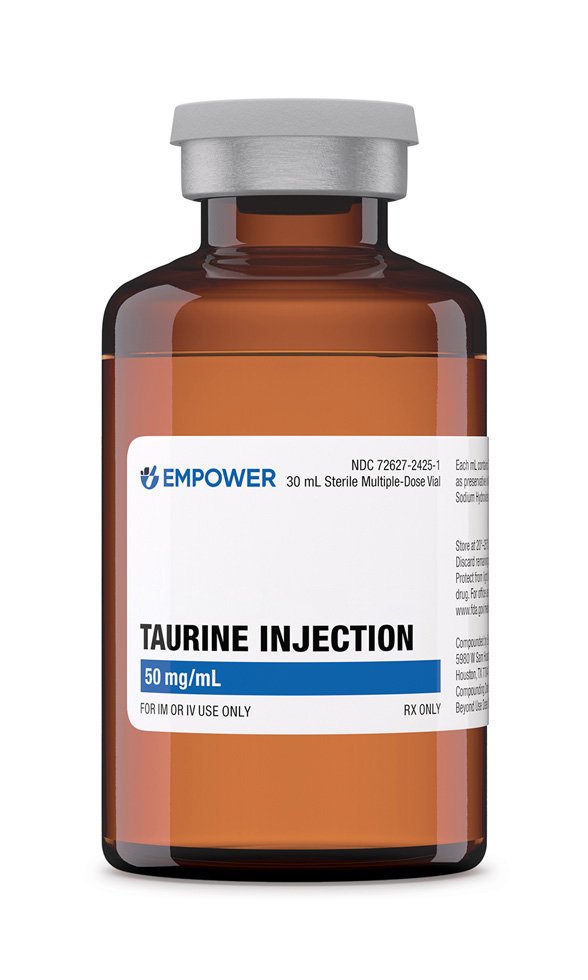
As a compounded prescription medication, Taurine Injection 50 mg/mL (30 mL vial) is used to augment taurine levels in certain medical conditions where supplementation may be beneficial. For example, taurine therapy has been explored as an adjunct in cardiovascular diseases (such as congestive heart failure and hypertension) and metabolic or liver disorders (including high cholesterol and chronic hepatitis), and even in supportive treatment of cystic fibrosis.
Taurine’s antioxidant and membrane-stabilizing properties have also prompted its use to help protect cells from chemotherapy-induced damage in cancer patients. This injectable formulation is prepared by a 503A compounding pharmacy or 503B outsourcing facility and is tailored to patient needs under the guidance of a healthcare provider (prescription required).
It is not an FDA-approved commercial drug; rather, it is a customized therapy intended to address specific taurine deficiencies or therapeutic goals in patients.
Administration: Taurine Injection can be given intramuscularly or intravenously (slow push or infusion), as directed by a physician.
Dosage: There is no one-size-fits-all dose; the amount and frequency are determined by the healthcare provider based on the patient’s indication and response. In clinical studies, oral taurine supplementation has ranged from about 1 to 6 grams per day in adults. For example, trials in heart failure have used roughly 3-6 g per day in divided doses, while some liver disease studies employed around 6 g per day for a limited duration. Pediatric dosing (for instance, in cystic fibrosis) has been about 30 mg per kg body weight per day in research settings.
When using the 50 mg/mL injection, the physician will calculate the appropriate volume (in milliliters) to reach the target dose. Taurine injections might be given a few times per week or as a periodic infusion, depending on the clinical goals. It is important to follow the dosing schedule provided by the healthcare professional and not to exceed the prescribed amount. If a dose is missed, consult the provider for guidance rather than doubling up doses.
Taurine exerts its effects through multiple mechanisms of action. It functions as an osmolyte that helps regulate intracellular water content and electrolyte balance, thereby maintaining proper cell hydration and volume.
Taurine also modulates calcium signaling in cells and interacts with neurotransmitter receptors, contributing to neuroprotective and stabilizing effects in the central nervous system. In the heart and muscle tissues, taurine’s influence on calcium flux and membrane stability can support normal contractility and protect against calcium overload or arrhythmias.
Additionally, taurine conjugates with bile acids in the liver to form bile salts, aiding in digestion and cholesterol excretion. It possesses significant antioxidant and anti-inflammatory activity, scavenging reactive oxygen species and inhibiting pro-inflammatory pathways (such as NF-κB) to protect tissues from oxidative stress damage.
These combined actions underlie taurine’s broad potential benefits, helping to stabilize cells, improve metabolic parameters, and protect vital organs; which may translate into improved cardiovascular, liver, and nervous system function in various clinical contexts.
Because taurine is a naturally occurring amino acid, there are no well-defined contraindications for its use apart from hypersensitivity to taurine or any component of the injection formulation. Patients with a known allergy to taurine or the diluents (e.g. the preservative in the vial) should not receive taurine injections. Note: Standard multi-dose taurine vials contain benzyl alcohol as a preservative, and benzyl alcohol is contraindicated in neonates due to the risk of a potentially fatal “gasping syndrome”. Therefore, Taurine Injection should not be used in newborn infants.
Caution is also advised in individuals with certain inborn errors of amino acid metabolism or those on extremely high-protein diets, although no specific taurine-related contraindications have been documented to date. As always, a healthcare professional will screen for any individual risk factors or allergies before recommending taurine therapy.
Taurine has mild interactions with a number of medications, though serious drug interactions are not commonly reported. Notably, taurine can inhibit the liver enzyme CYP2E1, which is involved in the metabolism of many substances (including certain anesthetics, acetaminophen, and alcohol). This means co-administration of taurine with drugs that rely on the CYP2E1 pathway could alter their clearance or effects.
There are also theoretical interactions where taurine may potentiate the effects of other medications: for instance, some sources suggest caution when taurine is combined with anticoagulant or antiplatelet drugs due to a potential increase in bleeding risk. Similarly, taurine might add to the blood-sugar-lowering effect of insulin or anti-diabetic drugs, or enhance the sedative effect of CNS depressants, although clear clinical evidence of harm is lacking.
Overall, taurine is considered to have a low interaction profile. It is still important to inform your healthcare provider about all medications and supplements you are taking, so that any potential interaction can be monitored and managed appropriately.
Taurine injection is generally well tolerated, with minimal adverse effects observed in human studies. No significant side effects have been noted at moderate dosages; even doses of several grams per day produce no serious reactions. In fact, taurine has been administered in research trials at up to 10 grams per day for several months without toxicity.
Only minor, transient symptoms have been reported infrequently, such as mild nausea or headache in a small subset of individuals. There is also no evidence that taurine causes stimulant-like effects (unlike caffeine) or any dependence/withdrawal issues. Overall, side effects are rare, and taurine therapy is considered very safe within recommended dosing ranges.
Due to insufficient data on safety, taurine supplementation is not recommended during pregnancy or breastfeeding. Trace amounts of taurine do reach the developing fetus (taurine naturally crosses the placenta and is present in breast milk), but using taurine above normal dietary levels in pregnant individuals has not been studied and is generally discouraged.
There is no established pregnancy category for taurine; however, experts advise that it should be used in pregnancy only if the potential benefit clearly outweighs any potential risk. Nursing mothers are likewise advised to avoid taurine injections or high-dose supplements, since it is unknown how excess taurine might affect a breastfed infant.
If a patient is or becomes pregnant while on taurine therapy, the provider will typically discontinue the injection or switch to alternative treatments with better-established safety profiles.
Taurine Injection should be stored at controlled room temperature, generally defined as 20-25 °C (68-77 °F). Keep the vial in its original packaging until use, and protect it from light exposure to prevent degradation. Do not freeze the medication.
If the injection is supplied in a multi-dose vial, discard any unused solution after the beyond-use date provided by the pharmacy. Always keep this and other medications out of reach of children. Proper storage ensures the product remains stable and effective until its expiration or beyond-use date.
For disposal of any unused taurine solution or expired vials, follow pharmacy or local guidelines (do not flush or pour into drains).