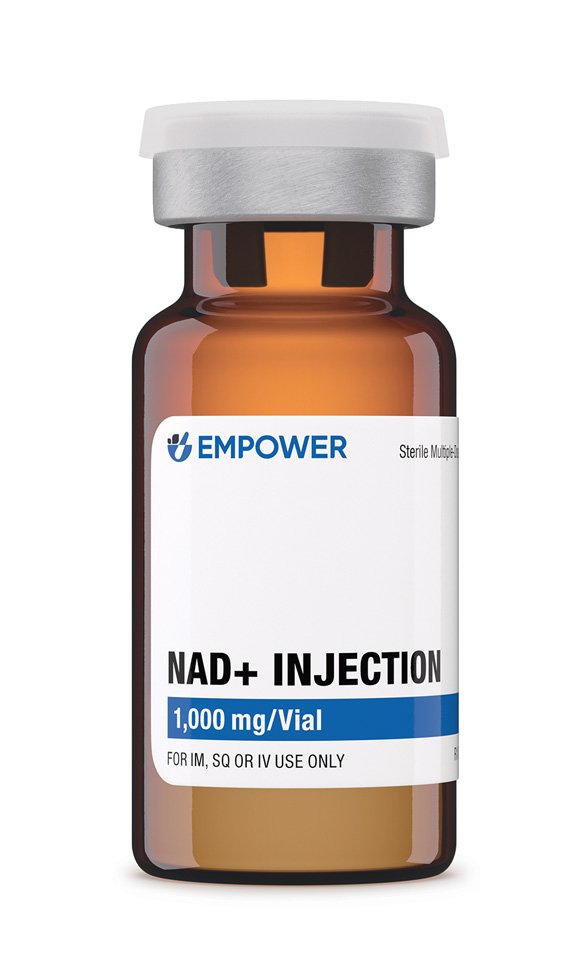
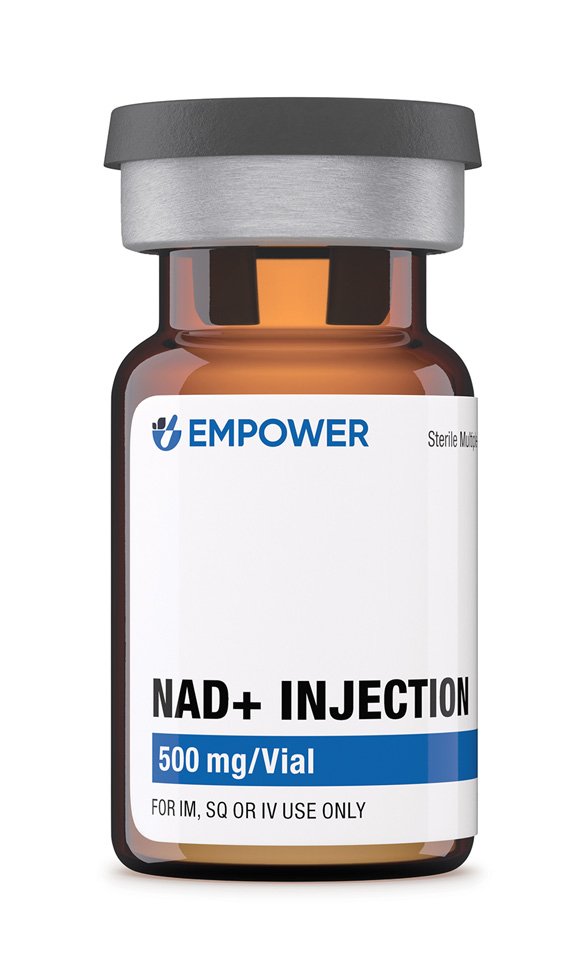
NAD+ Injection is a compounded prescription formulation of nicotinamide adenine dinucleotide (NAD+), a coenzyme found in all living cells and crucial for fundamental biological processes. NAD+ helps drive cellular energy production by shuttling electrons in metabolic pathways like glycolysis and the Krebs cycle, ultimately enabling ATP synthesis for cell function. Beyond its metabolic role, NAD+ also participates in DNA repair and cell signaling, making it essential for maintaining cellular health and viability. Natural NAD+ levels decline progressively with age; by middle age, tissues may contain roughly half the NAD+ they had in youth. This age-related NAD+ depletion has prompted interest in NAD+ supplementation strategies to support cellular metabolism and possibly counteract aspects of aging.
Clinically, NAD+ Injection has been explored for a range of potential wellness benefits, although robust evidence in humans remains limited. Advocates propose that boosting NAD+ could increase energy levels, enhance mitochondrial function, and improve fatigue or cognitive clarity in some individuals. NAD+ therapy is also being investigated in contexts like healthy aging and neuroprotection, and it has been trialed as an adjunct in addiction recovery programs to reduce withdrawal symptoms, though formal clinical trial data are still sparse. Importantly, NAD+ Injection is not an FDA-approved drug; it is prepared by licensed 503A compounding pharmaciesand 503B outsourcing facilities for patient-specific and office use with a doctor’s prescription. All potential benefits therefore must be weighed cautiously, and treatment is undertaken under medical supervision given that safety and efficacy are not yet established by regulatory authorities.
NAD+ Injection is supplied by compounding pharmacies as a lyophilized (freeze-dried) sterile powder, typically in vials containing 500 mg or 1,000 mg of NAD+ per vial. The powder is reconstituted with sterile diluent (such as bacteriostatic water) before use to yield an injectable solution. Dosing regimens are individualized, as there is no one-size-fits-all dosage for NAD+ therapy. For general wellness or anti-aging purposes, providers often start with relatively low doses and adjust based on patient response. A common protocol, for example, is to begin with about 20 mg of NAD+ administered subcutaneously and gradually increase the dose over subsequent injections up to around 100 mg per injection. These injections may be given a few times per week; a usual schedule is 1 to 3 times weekly, depending on how well the patient tolerates NAD+ and the goals of therapy. By ramping up the dosage slowly, patients can often avoid side effects like headache or nausea while still obtaining the energizing or cognitive benefits of NAD+. A maintenance plan might involve ongoing injections of 50-100 mg weekly or as directed by the prescribing provider. Importantly, NAD+ injections can be administered either in a clinic or self-administered at home if the patient has been properly instructed; the subcutaneous shots are given into the fatty tissue (for instance, the back of the arm or the abdomen) using a small insulin-type syringe for convenience.
In clinical research settings and certain intensive protocols (such as addiction detoxification), much higher NAD+ dosages have been utilized. For example, one early protocol for substance uses disorders employed 500-1,000 mg of NAD+ per day delivered by slow intravenous infusion over several consecutive days. In that setting, patients received high-dose NAD+ daily for about 4-10 days to alleviate acute withdrawal symptoms, followed by tapering to less frequent booster injections over the ensuing weeks. Such large doses are administered under direct medical supervision and via IV drip to ensure safety. Outside of specialized cases, most wellness protocols do not use daily high-dose NAD+; instead, they favor moderate doses spread out over time. Ultimately, the dosage and frequency of NAD+ Injection must be tailored to the individual’s needs, tolerability, and treatment objectives. A healthcare provider will determine the appropriate starting dose and titration schedule for each patient. They will also set an upper limit on the total weekly dose (for example, some experts recommend not exceeding ~300 mg per week in subcutaneous dosing without further evaluation) to minimize any risk of adverse effects. As with any compounded therapy, ongoing monitoring is part of dosage management; the provider may adjust the dose based on the patient’s energy levels, symptom improvements, or any side effects. Through this personalized approach, NAD+ Injection dosing can range from small booster doses to larger infusions, but always under professional guidance to ensure it remains safe and effective for the patient’s condition.
NAD+ plays a central role in cellular energy metabolism and is required for the proper function of mitochondria. In its oxidized (NAD+) and reduced (NADH) forms, this coenzyme cycles between metabolic reactions, accepting and donating electrons during nutrient breakdown and ATP generation. Each stage of respiration, from glycolysis in the cytoplasm to the citric acid cycle and oxidative phosphorylation in mitochondria, depends on NAD+/NADH to carry reducing equivalents, thereby driving the production of cellular energy. By supplying additional NAD+ to the body, NAD+ Injection may help ensure these energy-producing pathways can proceed optimally, particularly in situations of NAD+ depletion. In addition, NAD+ serves as a substrate for numerous enzyme systems that regulate cell function. For example, NAD+-dependent enzymes include the sirtuins (SIRT1-7), a family of protein deacetylases involved in gene expression, stress responses, and metabolic regulation, as well as poly(ADP-ribose) polymerases (PARPs) that assist in DNA repair. Sufficient NAD+ availability is necessary for these enzymes to operate, so raising NAD+ levels could in theory modulate pathways related to aging, inflammation, and cell survival.
While the precise mechanisms of action for NAD+ therapy’s purported benefits are not fully elucidated, multiple lines of research suggest several contributing effects. NAD+ augmentation may counteract age-related NAD+ loss caused by overactive NAD-consuming enzymes (such as the NADase CD38), thereby supporting mitochondrial maintenance and metabolic homeostasis. Laboratory studies in cell and animal models of accelerated aging have shown that replenishing NAD+ can restore mitochondrial function and stimulate beneficial cellular recycling processes like mitophagy. It is postulated that through these mechanisms, NAD+ repletion might improve cellular energy capacity and resistance to oxidative stress. However, in human systems the outcome of boosting NAD+ is complex and likely involves numerous pathways, from enhanced activity of sirtuins (implicated in longevity and metabolic control) to improved DNA damage repair, all of which are areas of ongoing investigation. In summary, NAD+ Injection provides additional coenzyme substrate that may broadly support the cell’s energy-producing and regulatory enzymes, but its exact biological effects in people remain an area of active research and may vary depending on individual physiology.
At present, NAD+ Injection has no well-defined absolute contraindications aside from hypersensitivity to NAD+ or any ingredient in the formulation. Individuals with a known allergy to NAD+ or its preparation components must avoid this therapy. Because NAD+ is a form of vitamin B3-related compound, true allergic reactions are uncommon; however, any prior adverse reaction to niacinamide/NAD+ products would warrant against use of NAD+ Injection. There are no other officially reported contraindications specific to NAD+ as of now, but the absence of documented contraindications largely reflects limited clinical study; it does not guarantee that NAD+ therapy is appropriate for everyone⁷. Physicians therefore evaluate each patient’s health status before recommending NAD+ injections and exercise caution in certain scenarios even in the absence of formal contraindication labels.
In practice, providers may advise against NAD+ injections in patients with serious underlying medical conditions as a precaution. For example, those with severe liver or kidney impairment, unstable heart disease, or other significant systemic illnesses are typically approached carefully if considering NAD+ therapy. The metabolism and elimination of NAD+ (and its by-products) could be altered in advanced hepatic or renal dysfunction, and high-dose NAD+ might theoretically affect cardiovascular dynamics, so practitioners generally avoid or closely supervise NAD+ use in such settings. Similarly, individuals with active cancer are usually counseled not to use NAD+ Injection. NAD+ supports fundamental energy pathways in all cells, including cancer cells, raising concern that artificially boosting NAD+ might fuel malignancy growth or interfere with certain cancer treatments. Although a direct causal link between NAD+ supplementation and cancer progression has not been proven, experts recommend that patients with an ongoing cancer or a history of cancer only consider NAD+ therapy with clearance from their oncologist. In summary, while NAD+ Injection is a broadly applicable metabolic therapy, it should not be used by anyone allergic to it, and it is generally avoided in pregnant women, cancer patients, or those with serious chronic diseases, absent compelling medical rationale. All candidates for NAD+ therapy should be screened by a qualified provider to ensure no individualized contraindications or safety concerns.
No significant drug-drug interactions with NAD+ Injection have been identified in the medical literature to date. NAD+ is a form of a naturally occurring coenzyme/vitamin, and it does not appear to directly interfere with common medications or supplements based on current knowledge. In clinical use thus far, patients receiving NAD+ infusions or injections have not shown notable interaction effects with other drugs; for instance, there are no reports of NAD+ altering the metabolism of prescription medications or diminishing their efficacy. However, the absence of known interactions may partly reflect the limited scope of formal studies on NAD+ therapy, so this lack of interactions should be interpreted with caution. It remains possible that as NAD+ use becomes more widespread, some interactions could emerge. For this reason, patients are advised to inform their healthcare provider of all medications, supplements, or herbs they are taking before starting NAD+ injections, even though no incompatibilities are documented thus far. Healthcare providers will monitor any unusual responses and can adjust treatment if any potential interaction is suspected.
One practical consideration during NAD+ Injection therapy is the management of NAD+ metabolism by-products. When NAD+ is administered, it is ultimately metabolized to nicotinamide (vitamin B3) as it is utilized in the body. Excess nicotinamide is eliminated partly through a methylation pathway, meaning it consumes methyl donors in the process of excretion. To support this metabolic process, some clinicians recommend co-supplementation with a methyl donor such as trimethylglycine (TMG) while on NAD+ injections. TMG can help replenish methyl groups and facilitate the clearance of nicotinamide, theoretically reducing the buildup of by-products that could cause fatigue or headaches in some individuals. Though this is not an interaction in the traditional sense, it is an adjunctive measure that may improve tolerance of NAD+ therapy. Aside from such supportive strategies, patients do not typically need to avoid any specific foods, drinks, or medications while on NAD+ Injection. Nevertheless, it is prudent to have regular medical supervision, so any subtle interaction or side effects can be promptly identified and managed appropriately. Overall, NAD+ Injection is considered compatible with most other therapies, with no known adverse drug interactions, but comprehensive disclosure of one’s medication regimen to the treating provider is important for safe care.
pharmaceutical NAD+ tends to produce only mild, transient side effects in most people. Common reactions can include fatigue, nausea, headache, or lightheadedness during or after an injection. Some individuals experience a sensation of warmth, flushing, or slight dizziness, especially if the infusion or injection is given rapidly. There may also be minor irritation at the injection site, for example, redness, tenderness, or a brief burning sensation where the NAD+ solution is injected subcutaneously. These localized reactions typically resolve quickly. Gastrointestinal upset is infrequent but has been noted (e.g. a few patients have reported stomach discomfort or loose stools). Overall, these side effects are short-lived and manageable, often improving by slowing the rate of administration or taking breaks during an intravenous infusion if needed.
Crucially, the side effect profile of NAD+ largely depends on dosage and infusion rate. Early case reports suggested that delivering NAD+ too rapidly can provoke acute symptoms. For instance, in one 1960s study of intravenous NAD+ for addiction, patients who received a fast IV drip experienced immediate headache and shortness of breath, whereas those given the same dose at a slower drip rate (under ~35 drops/min) had no distress. To minimize such effects, clinics now administer NAD+ infusions slowly (over several hours) or use divided subcutaneous doses. If patients do experience headaches, chest tightness, or dizziness during an NAD+ infusion, it is often relieved by pausing or slowing the infusion rate. Other reported side effects have been mild muscle fatigue or feeling “chilled” during a long infusion, which likewise tend to subside afterward. In rare instances, high-dose NAD+ might transiently elevate markers of liver function (such as bilirubin or enzyme levels), but these changes have not been clinically significant and normalize shortly after treatment.
Notably, clinical studies to date have not identified any severe or lasting adverse events attributable to NAD+ Injection. In a pilot trial of NAD+ intravenous infusion in healthy adults, subjects receiving 750 mg of NAD+ over 6 hours reported no negative symptoms at all, and there were no vital sign abnormalities or serious laboratory derangements compared to placebo. This reinforces that NAD+ therapy, when administered in a controlled medical setting, has a favorable safety profile. Still, because NAD+ injections are a relatively novel therapy, patients are monitored for any unexpected reactions. Allergic reactions to NAD+ are extremely rare, but as with any injectable substance, there is a remote possibility of hypersensitivity; signs like rash, itching, or swelling would necessitate immediate medical attention. Additionally, standard injection risks (infection at injection site, vein irritation for IV, etc.) apply, though proper sterile technique makes these complications uncommon. Overall, NAD+ Injection’s side effects are mild and manageable, and serious side effects appear rare. Patients often finish NAD+ treatment reporting positive effects (such as increased energy or mental clarity) with few downsides aside from the transient discomforts noted above. Nevertheless, ongoing surveillance and research are important to fully characterize long-term safety as use of this therapy expands.
The safety of NAD+ Injection has not been established in pregnancy, and its use is not recommended for pregnant women. NAD+ has critical roles in fetal development and maternal metabolism, but there is a lack of any controlled data on administering high-dose NAD+ to pregnant patients. Because no studies have evaluated potential risks, such as effects on the fetus or pregnancy outcomes, clinicians advise against NAD+ therapy during pregnancy out of an abundance of caution.
Similarly, women who are breastfeeding should avoid NAD+ injections, since it is unknown whether the exogenous NAD+ could affect the nursing infant or alter milk composition. Until more information is available, NAD+ Injection is only initiated in non-pregnant adults, and women of childbearing potential are typically asked about pregnancy status before starting therapy. If a patient becomes pregnant while receiving NAD+, the treatment would be discontinued unless there were extraordinary circumstances and a careful risk-benefit assessment by the healthcare provider. In summary, due to insufficient safety data, NAD+ Injection is contraindicated in pregnancy and during breastfeeding to protect both mother and child. All potential female patients are screened and counseled on this point, and effective contraception is recommended for those undergoing NAD+ therapy if applicable.
Proper storage of NAD+ Injection is important to maintain its stability and potency. Pharmacies typically ship NAD+ as a dry lyophilized powder, which should be kept at controlled room temperature (approximately 20°C to 25°C / 68°F to 77°F), protected from excessive heat, moisture, and light. Until it is reconstituted, the powder vial should be stored in its original container, tightly sealed and away from any humid environments (to prevent degradation). Once the NAD+ powder is mixed with diluent to create the injectable solution, the unused solution must be kept refrigerated at 2°C to 8°C (36°F to 46°F). The reconstituted NAD+ is not preserved for long periods at room temperature, so refrigeration is necessary to slow any breakdown of the product. Patients receiving multi-dose vials are instructed to store the vial in the fridge between uses. Additionally, compounded NAD+ solutions come with a beyond-use date (BUD) after which any remaining solution should be discarded; this is often around 90 days from compounding when refrigerated, or shorter if stored at room temperature as stability permits. Once a vial has been punctured and is in use, it is generally recommended to discard any leftover solution after ~28 days for sterility reasons (even if within the chemical BUD). NAD+ Injection should be always kept out of reach of children and pets. When disposing of any unused NAD+ solution or expired vials, one should follow proper medical waste protocols: do not pour it down drains or flush it. Instead, discard through a pharmacy take-back program or as instructed by the healthcare provider or pharmacist. By adhering to these storage guidelines, patients can ensure that each dose of NAD+ Injection remains effective and safe up until its indicated expiration.