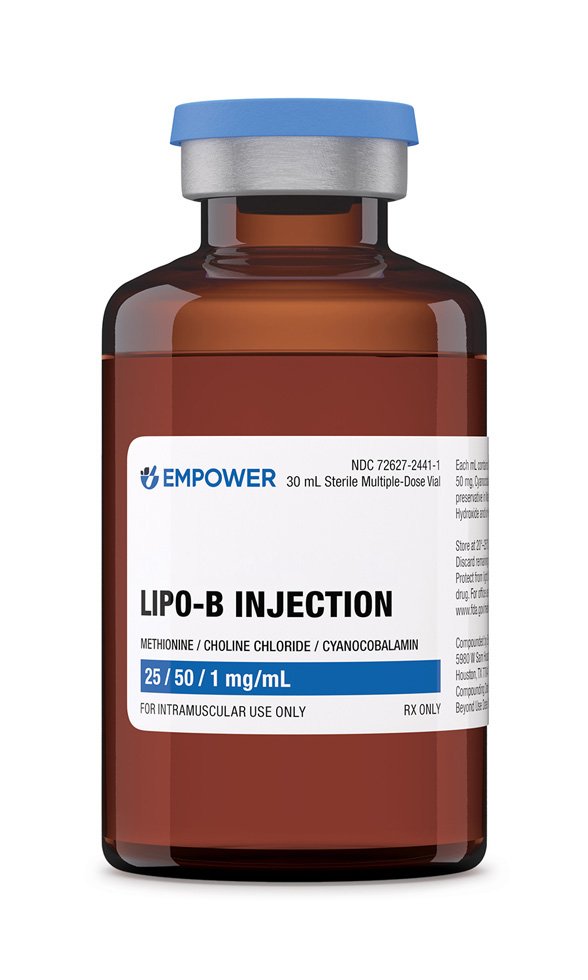
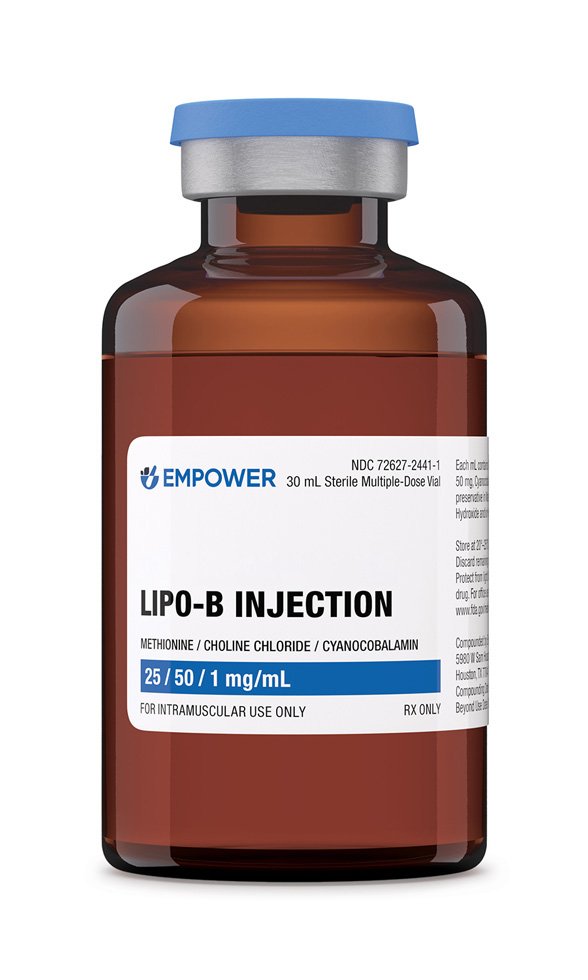
Lipo-B (MIC) injection is a compounded formulation that contains methionine, choline, and cyanocobalamin (vitamin B₁₂).
These ingredients are considered lipotropic agents, or “fat-burning” nutrients, which may support the metabolism of fat.
Lipo-B injections are typically used as a supplemental aid to weight loss, intended to complement a healthy diet and exercise regimen.
Administration: Lipo-B comes as an injectable solution to be given intramuscularly (into a muscle). In a clinical or home setting (with proper guidance), it is often injected in areas such as the upper arm, thigh, hip, or buttock. Each 1 mL of Lipo-B injection typically contains approximately 25 mg of methionine, 50 mg of choline chloride, and 1 mg of cyanocobalamin (vitamin B₁₂), provided in multi-dose vials by compounding pharmacies. The intramuscular route bypasses the digestive system, allowing the nutrients to be absorbed directly.
Frequency: The dosing schedule for Lipo-B injections can vary based on individual needs and physician recommendations. In many weight loss programs, patients receive a Lipo-B injection about once a week for optimal results. Most practitioners find that weekly injections help maintain consistent levels of the lipotropic factors.
In some cases, healthcare providers may adjust the frequency, for example, some patients might be advised to take the injection twice weekly or once every two weeks, depending on their specific goals and how they respond to treatment.
The duration of therapy (number of weeks or months of injections) is also determined on a case-by-case basis. It’s important that a qualified healthcare provider establish the dosage regimen and monitor progress, adjusting the plan as necessary to ensure both safety and effectiveness.
Lipo-B injections work by potentially enhancing the body’s fat-burning processes through their key ingredients.
Methionine and choline play vital roles in fat metabolism: they help the liver break down fats more efficiently and prevent accumulation of fat in the liver.
By promoting the release and transport of stored fat, these lipotropic nutrients make it easier for the body to utilize fat as an energy source.
Additionally, cyanocobalamin (vitamin B₁₂) in the Lipo-B injection may help boost energy production and may support a higher metabolic rate, which can further aid in burning calories and fat.
Together, this combination of amino acids and B₁₂ vitamin may synergistically enhances fat mobilization and utilization by the body.
There are certain clinical conditions under which Lipo-B injections should be avoided or used only with extreme caution.
Individuals with a known hypersensitivity or allergy to vitamin B₁₂ (cobalamin) or any other component of the injection must not use Lipo-B, as allergic reactions could be severe.
Patients with metabolic acidosis or severe liver disease should also avoid Lipo-B injections; methionine, one of the key ingredients, may aggravate metabolic acidosis and a compromised liver may be unable to properly metabolize the compounds.
Furthermore, Lipo-B is contraindicated in people with Leber’s hereditary optic neuropathy (Leber’s disease); cyanocobalamin has been reported to precipitate rapid optic nerve damage in individuals with this rare condition.
Lipo-B injection’s components (particularly vitamin B₁₂) have relatively few serious drug interactions, but it is still important to consider potential interactions.
For example, the antibiotic chloramphenicol can interfere with the effects of vitamin B₁₂, reducing the expected hematologic response to B₁₂ therapy.
In addition, drugs that affect blood cell production, such as certain chemotherapy agents or some HIV medications, may blunt the benefits of vitamin B₁₂ or alter blood counts.
While methionine and choline do not have well-known dangerous interactions, it is essential to inform your healthcare provider of all medications, supplements, or herbal products you are taking before starting Lipo-B injections. This precaution helps prevent any unforeseen interactions and ensures safe use of the injection alongside other treatments.
Lipo-B (MIC) injections are generally well tolerated in most individuals. However, as with any supplement or medication, some side effects can occur.
Mild gastrointestinal symptoms have been reported in some cases; for instance, a few people experience nausea, upset stomach, or diarrhea after the injection. Others might notice transient dizziness or light-headedness shortly following an injection.
Injection site reactions are also possible; these can include pain, redness, or swelling at the site of the shot, which typically resolve on their own. In rare instances, repeated injections of certain lipotropic components have led to inflammation or small nodules forming under the skin at the injection site.
Serious adverse reactions to Lipo-B injections are uncommon. Allergic reactions are possible, though infrequent; signs of an allergy may include rash, hives, itching, or even anaphylaxis (a severe allergic response) in highly sensitive individuals.
There have also been rare reports of high-dose vitamin B₁₂ (as in injectable form) precipitating skin outbreaks such as acne or rosacea in susceptible persons.
Overall, for the majority of users the side effects are mild and temporary, but anyone experiencing persistent or severe symptoms should seek medical attention.
Lipo-B injections are not recommended for use during pregnancy. There is insufficient clinical research to establish the safety or efficacy of these injections in pregnant women, so avoiding them is advised to prevent any possible risk to the developing fetus.
Similarly, women who are breastfeeding should refrain from using Lipo-B injections. It is not known whether the components of Lipo-B (particularly vitamin B₁₂ or amino acids in high doses) could affect a nursing infant, and therefore the safest course is to avoid such injections while breastfeeding.
Healthcare professionals generally counsel pregnant or nursing mothers to instead rely on prenatal vitamins or physician-supervised nutrition plans rather than lipotropic injections in order to protect the baby.
Store Lipo-B injection vials at controlled room temperature, ideally around 68°-77°F (20°-25°C).
Keep the medication in a cool, dry place, away from direct heat, moisture, and light. Do not freeze the solution. As with all medications, store it out of reach of children.
If any medication remains unused beyond the recommended beyond-use or expiration date, it should be disposed of properly; do not pour unused solution down the drain or flush it.
Follow any disposal instructions on the label or given by the pharmacy, or return the unused medication to a take-back program if available.