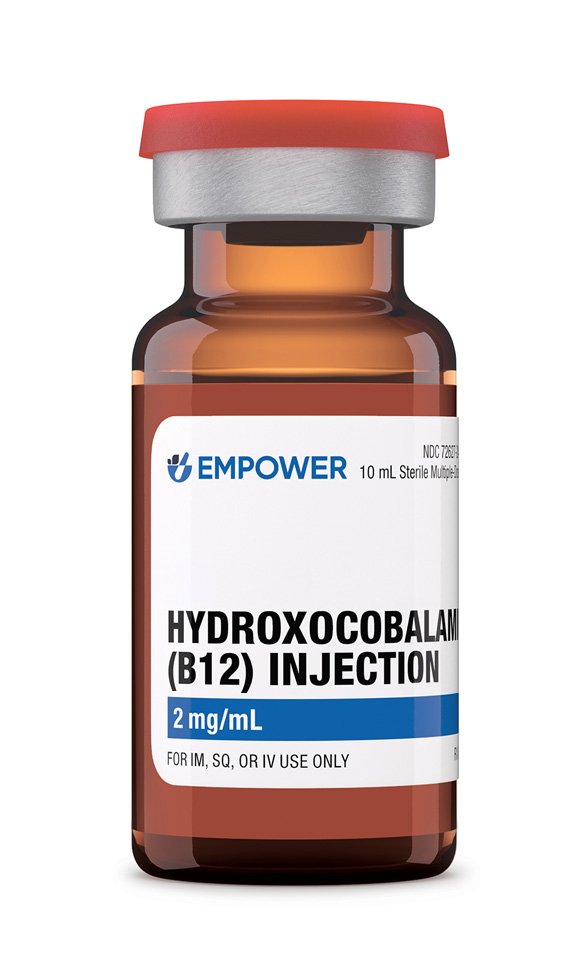
Hydroxocobalamin (Vitamin B12) Injection is a compounded sterile solution of hydroxocobalamin, a form of vitamin B₁₂, typically supplied at a concentration of 2 mg/mL in a 10 mL vial.
This medication is available through both 503A compounding pharmacies and 503B outsourcing facilities, meaning it can be prepared for individual prescriptions or in bulk for office use.
Hydroxocobalamin is administered via intramuscular or intravenous injection to treat and prevent vitamin B₁₂ deficiency, particularly in conditions like pernicious anemia where oral B₁₂ absorption is impaired.
By restoring cobalamin levels, these injections help support healthy red blood cell production, neurological function, and DNA synthesis.
Dosing of hydroxocobalamin should be individualized based on the severity of vitamin B₁₂ deficiency and clinical response.
For vitamin B₁₂ deficiency (e.g., pernicious anemia), a common regimen is to begin with frequent intramuscular injections to replenish body stores.
A typical loading dose is 1,000 mcg (1 mg) administered intramuscularly several times per week (such as every other day or 3 times per week) for a couple of weeks.
After initial repletion, a maintenance dose is given, often 1,000 mcg intramuscularly every month or every 2 to 3 months, to prevent recurrence of deficiency.
In practice, some protocols use 1 mg IM monthly for maintenance once levels are stabilized.
Hydroxocobalamin may also be given intravenously in certain scenarios (for example, 5 g IV for acute cyanide poisoning antidote therapy), but such high-dose use is in emergency settings and distinct from routine deficiency treatment.
The dosing schedule should be determined by a healthcare provider, with periodic monitoring of vitamin B₁₂ levels and clinical symptoms to adjust therapy as needed.
Hydroxocobalamin is a precursor of the active coenzyme forms of vitamin B₁₂ (methylcobalamin and adenosylcobalamin).
Once injected, it is converted into these active forms, which serve as essential cofactors in key metabolic processes such as DNA synthesis, fatty acid metabolism, and neuronal myelin formation.
In patients with cyanide poisoning, hydroxocobalamin also acts as an antidote by binding to cyanide ions with high affinity to form nontoxic cyanocobalamin.
This cyanocobalamin complex is then excreted in the urine, thereby detoxifying the cyanide and restoring cellular respiratory function.
The primary contraindication for hydroxocobalamin injection is a known hypersensitivity to hydroxocobalamin, cobalt, or any component of the formulation.
Patients with a history of allergy to vitamin B₁₂ or cobalt should not receive this injection.
There are no other absolute contraindications reported for hydroxocobalamin use in deficiency states, but caution is advised in individuals with conditions such as early Leber’s optic neuropathy (a rare hereditary optic atrophy) due to the theoretical risk of worsening vision.
In all cases, a healthcare provider should evaluate patient history for any contraindication before initiating therapy.
Hydroxocobalamin has relatively few major drug interactions.
However, certain medications can affect its efficacy. For example, concurrent use of chloramphenicol (an antibiotic) may attenuate the hematologic response to vitamin B₁₂ therapy.
Large doses of folic acid may also partially mask or worsen vitamin B₁₂ deficiency by correcting anemia while allowing neurological damage to progress.
In addition, oral contraceptives have been noted to lower serum B₁₂ levels, though this effect is usually clinically insignificant.
It is advisable for patients to inform their healthcare provider of all medications and supplements they are taking, so that potential interactions can be monitored and managed appropriately.
Most patients tolerate hydroxocobalamin injections well. Common side effects tend to be mild and transient. These may include pain, redness or swelling at the injection site, mild diarrhea, nausea, or itching of the skin.
Some individuals report a sensation of body swelling or warmth, but these symptoms typically resolve on their own within a few hours.
Serious adverse effects are uncommon. Rarely, hypersensitivity reactions can occur, for instance, urticaria (hives) or other allergic-type reactions have been reported in isolated cases.
When hydroxocobalamin is given in high doses (such as during cyanide poisoning treatment), unique effects can be observed: patients often experience a transient reddening of the skin or mucous membranes and a reddish discoloration of the urine due to drug excretion.
High-dose therapy may also cause a brief increase in blood pressure, though this usually returns to baseline within a few hours.
Patients should be advised to contact their healthcare provider if they experience any severe or persistent side effects, such as difficulty breathing, chest tightness, severe rash, or dizziness.
Hydroxocobalamin can be used during pregnancy, and correcting vitamin B₁₂ deficiency is important for the health of both mother and baby.
Vitamin B₁₂ is an essential nutrient for fetal development, and untreated B₁₂ deficiency in a pregnant woman can lead to serious neurological damage in the infant.
No adverse fetal effects have been documented from normal therapeutic doses of hydroxocobalamin in human pregnancies.
However, there are no well-controlled studies in pregnant women, so this medication is generally recommended during pregnancy only when clearly needed.
Very high doses (such as those used for cyanide poisoning) should be used with caution and only if the potential benefit outweighs the risk.
Hydroxocobalamin is classified as Pregnancy Category C in the United States, indicating that risk to the fetus cannot be ruled out in the absence of definitive human data.
In practice, the benefit of treating a true B₁₂ deficiency in pregnancy, preventing anemia and neurological injury, is considered to far outweigh any theoretical risks, under the guidance of a healthcare professional.
Pregnant patients with B₁₂ deficiency should be closely monitored and treated appropriately to ensure healthy outcomes.
Vials of hydroxocobalamin injection should be stored at controlled room temperature (generally 20°-25°C, or 68°-77°F) and protected from light.
Exposure to light can degrade vitamin B₁₂; therefore, the medication is usually kept in its original amber vial or carton until use.
Do not freeze the medication.
Always keep the medication out of reach of children and discard any unused portion after the recommended period, in accordance with safe disposal guidelines.