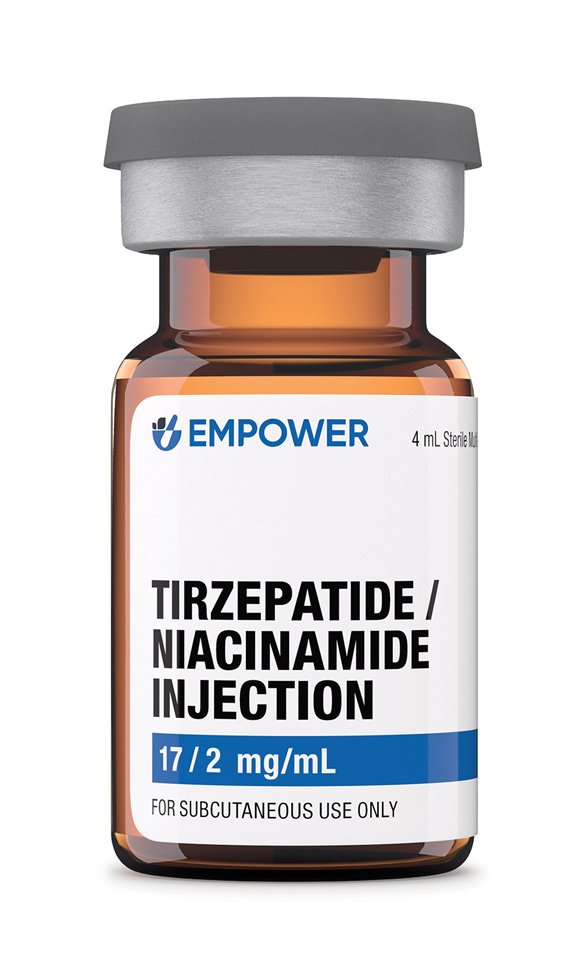
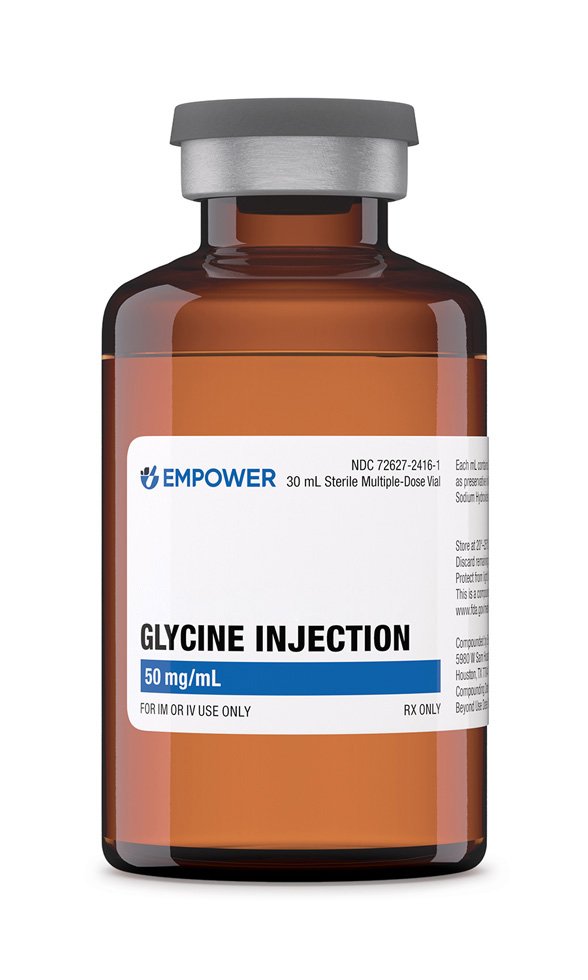
Glycine Injection (50 mg/mL in a 30 mL vial) is a compounded sterile solution of the amino-acid glycine. Glycine is the simplest naturally occurring amino acid and is classified as non-essential in humans (meaning the body may synthesize it endogenously). Despite being “non-essential,” glycine plays critical roles in normal physiology. It is a fundamental building block of proteins and is involved in the synthesis of DNA, glutathione, creatine, and other important biomolecules.
Clinically, glycine has been used as a component of total parenteral nutrition and has been investigated in various therapeutic contexts. For example, it has been studied as an adjunctive treatment in certain neurological conditions (such as schizophrenia) owing to its activity in the central nervous system. It has also been utilized historically in diagnostic provocation tests (e.g., to stimulate growth-hormone release) and as an irrigating fluid in surgical settings (in much more diluted form).
However, it is important to emphasize that glycine 50 mg/mL injection is not a commercially marketed drug for any specific indication. Its use is off-label and based on clinical judgment in individualized cases. All potential uses of this injection should be supported by careful consideration of the patient’s condition and current scientific evidence. The therapeutic benefits of supplemental glycine remain an area of ongoing research, and robust clinical-efficacy data are limited.
Providers typically reserve glycine injection for specialized needs-for instance, as part of a tailored amino-acid supplementation regimen-and treatment should only be initiated and monitored by qualified healthcare professionals in accordance with applicable laws and guidelines.
No standardized dosing guidelines exist for Glycine Injection 50 mg/mL; prescriptions are individualized. In practice, clinicians commonly begin with 0.5 g – 2 g (≈10 – 40 mL of 50 mg/mL solution) administered as a slow IV push or diluted infusion, adjusting per response.
Some historical or research protocols have used much higher doses (e.g., 250 mg/kg as a single IV bolus in diagnostic growth-hormone testing), but such regimens are uncommon outside controlled studies. Dose escalation should proceed cautiously, with monitoring of vital signs, electrolytes, and-if relevant-ammonia levels.
Glycine’s mechanism of action in the body is multifaceted, reflecting its diverse roles as both a neurotransmitter and a metabolic substrate. In the central nervous system, glycine functions as a neurotransmitter with dual properties. It is one of the major inhibitory neurotransmitters in the spinal cord and brainstem, akin to γ-aminobutyric acid (GABA). When glycine binds to inhibitory glycine receptors (chloride-channel complexes), it causes an influx of chloride ions into neurons, hyperpolarizing the cell membrane and thereby reducing neuronal excitability. This inhibitory action contributes to glycine’s calming and reflex-modulating effects on the spinal cord-for example, helping regulate motor-neuron activity and muscle tone.
At the same time, glycine is also an obligatory co-agonist at N-methyl-D-aspartate (NMDA) receptors, a type of excitatory glutamate receptor in the brain. Glycine must occupy its modulatory binding site on the NMDA-receptor complex for glutamatergic neurotransmission to occur fully. Through this role, glycine positively modulates NMDA-receptor activity, which is involved in synaptic plasticity, learning, and memory. (Notably, this NMDA co-agonist function underlies research into glycine for neuro-psychiatric conditions; by enhancing NMDA-receptor function, high-dose glycine has been reported to influence symptoms in schizophrenia in some studies.)
Peripherally, glycine serves as a key building block and metabolic molecule. It is integral to collagen structure-approximately one-third of the amino-acid content of collagen (the main connective-tissue protein) is glycine. Every third residue in the collagen triple helix is a glycine molecule, highlighting glycine’s importance in maintaining the tensile strength and integrity of skin, bones, cartilage, and tendons. Glycine is also a precursor for several critical biomolecules: it contributes to the synthesis of creatine (essential for muscle-energy storage), porphyrins such as heme, and purines, and it conjugates with bile acids to form bile salts. In addition, glycine combines with glutamate and cysteine to form glutathione, the body’s primary intracellular antioxidant. By influencing glutathione availability, glycine may affect oxidative-stress and detoxification pathways in cells.
Given these roles, an administered dose of glycine (such as 50 mg/mL injection) may have both neuromodulatory and metabolic effects. For instance, increasing plasma glycine through injections may transiently augment inhibitory neurotransmission (potentially producing a mild sedative or muscle-relaxant effect) and support anabolic processes such as collagen deposition or antioxidant synthesis. The net physiological effect of Glycine Injection depends on dose and route of administration: lower doses primarily supplement normal metabolic needs, whereas high doses (especially if given rapidly) may cross the blood-brain barrier and significantly alter neurotransmitter dynamics.
Overall, glycine’s action is complex-spanning from central-nervous-system neurotransmission to peripheral-tissue biosynthesis-which underscores why glycine has been explored in contexts ranging from neurological disorders to wound healing.
Because glycine is an amino acid naturally present in the body, there are relatively few absolute contraindications; however, certain conditions preclude or caution against Glycine Injection (50 mg/mL) because of adverse-outcome risk. Severe renal impairment-especially anuria (inability to produce urine)-is a primary contraindication. Patients who are anuric or have substantially compromised kidney function should not receive glycine injections because they cannot adequately excrete the glycine load and excess fluid. Administration could lead to fluid overload or accumulation of metabolic by-products. Similarly, severe heart failure or pulmonary edema represents a contraindication or strong precaution, as large amounts of glycine solution may expand intravascular volume and precipitate or worsen congestive heart failure or pulmonary congestion.
Hepatic impairment is another important consideration. Glycine is mainly metabolized via the liver (one pathway converts glycine to serine with concomitant ammonia production). In patients with severe liver dysfunction, normal glycine metabolism may be impaired, risking hyperammonemia. Therefore, glycine injection should be avoided or used with great caution in those with advanced liver disease or disorders of ammonia metabolism. Additionally, although true allergies to glycine are exceedingly rare, any prior hypersensitivity reaction to glycine or to components of the formulation would contraindicate its use. Patients with the rare metabolic disorder non-ketotic hyper-glycinemia would also be contraindicated from receiving glycine.
In summary, Glycine Injection should not be used in patients who cannot properly metabolize or excrete the amino-acid or solution load. All candidates require a thorough medical evaluation, with careful screening for renal failure, hepatic insufficiency, or cardiopulmonary compromise, and close monitoring whenever glycine is administered to anyone with borderline organ function.
Glycine is an amino acid rather than an enzyme-inhibiting drug, but it may still interact with other medications through pharmacodynamic and physiologic mechanisms. One well-documented interaction involves the atypical antipsychotic clozapine: high-dose glycine supplementation has been reported to interfere with clozapine’s therapeutic efficacy in schizophrenia patients. In clinical studies, patients receiving clozapine plus adjunctive glycine experienced reduced antipsychotic benefit-likely owing to altered NMDA-receptor signaling. Consequently, patients on clozapine are generally advised not to take glycine unless under close psychiatric supervision.
Beyond clozapine, glycine’s interactions largely stem from its role as an inhibitory neurotransmitter. Concomitant use with central nervous-system depressants (e.g., benzodiazepines, barbiturates, opioids) could enhance sedation or respiratory depression. Although no formal drug-interaction studies exist in this context, caution is warranted. Glycine may also interact with substances affecting amino-acid metabolism; for example, valproic acid raises ammonia levels, and added glycine could theoretically exacerbate hyperammonemia.
Always inform healthcare providers of all medications and supplements before starting glycine injection so potential interactions can be anticipated and managed safely.
Because glycine is endogenously produced, low-dose injections are generally well tolerated, and many patients experience no noticeable adverse reactions. However, pharmacologic doses (or rapid infusions) may produce side effects. Mild sedation or drowsiness is reported most often. Transient light-headedness, dizziness, or nausea can occur, especially with high or rapidly infused doses. Glycine solutions also carry fluid-shift risks: large intravenous infusions have been linked to dilutional hyponatremia and fluid overload in surgical settings.
Extremely high plasma glycine concentrations may lead to hyperglycinemia and, via catabolism, hyperammonemia, potentially causing neurological symptoms such as headache or confusion-though such events are exceedingly rare outside massive irrigant absorption.
Allergic responses to glycine itself are exceptionally uncommon. Nevertheless, any injection may provoke local reactions or sensitivity to excipients. Proper dosing, slow infusion, and clinical monitoring help minimize risk; patients should report unusual or severe symptoms promptly.
Glycine requirements rise in late gestation, but safety data for parenteral glycine supplementation during pregnancy are extremely limited. No adequate animal-reproduction or controlled-human studies have been conducted to evaluate teratogenicity or developmental toxicity. Therefore, glycine injections should be given to pregnant women only if potential maternal benefit clearly outweighs possible fetal risk.
Emerging research suggests that glycine may become “conditionally indispensable” (dietarily essential) during the third trimester, yet this physiological need does not imply that high-dose injections are recommended. Similar caution applies during lactation: while glycine is naturally present in breast milk, the impact of pharmacologic doses is unknown. Pregnant or nursing individuals should seek specialist advice before receiving glycine injections.
Store vials at 20 °C – 25 °C (68 °F – 77 °F), protected from excessive heat and direct light. Do not freeze unless explicitly allowed by the pharmacy, as freezing may cause precipitation or container damage.
Keep vials in their original packaging; once the rubber stopper is punctured, use the contents promptly or within the pharmacy-specified beyond-use date (BUD). Discard any unused portion unless multi-dose use and storage conditions have been clearly outlined.
Inspect the solution visually before administration-do not use if discolored, cloudy, or particulate. Dispose of expired or compromised vials per local medical-waste regulations. Keep out of reach of children.