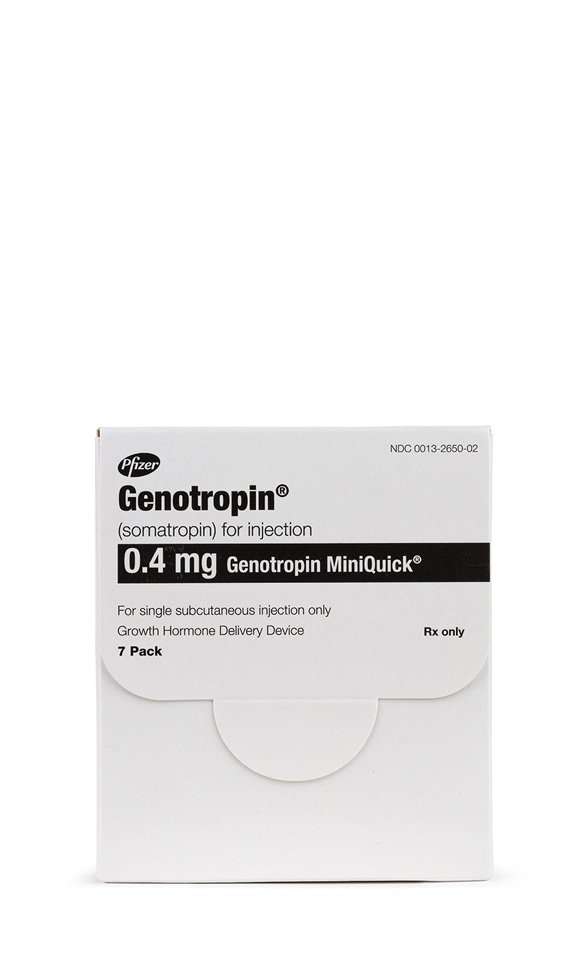
Genotropin Miniquick contains recombinant somatropin, a synthetic form of human growth hormone that is biologically identical to the naturally occurring growth hormone produced by the pituitary gland. This medication represents a significant advancement in growth hormone replacement therapy, utilizing recombinant DNA technology to provide a consistent, pure, and effective treatment option for patients with growth hormone deficiency. The active ingredient, recombinant somatropin, is produced using Escherichia coli bacteria through sophisticated biotechnology processes that ensure high purity and biological activity.
Recombinant somatropin may play a crucial role in addressing various growth-related disorders and hormone deficiency conditions. Healthcare providers may prescribe this medication for pediatric patients experiencing growth failure due to inadequate endogenous growth hormone production, as well as for specific conditions such as Turner syndrome, Prader-Willi syndrome, and children born small for gestational age who fail to demonstrate catch-up growth. In adult populations, this therapy could potentially be utilized for growth hormone deficiency of either childhood or adult onset.
The development of recombinant somatropin has revolutionized the treatment landscape for growth hormone deficiency, offering a safer alternative to previously used pituitary derived growth hormone. This biotechnology-derived medication may provide patients with consistent therapeutic outcomes while minimizing the risks associated with earlier treatment approaches. The Miniquick delivery system represents an innovative approach to growth hormone administration, potentially offering convenience and precision in dosing for patients requiring this specialized therapy.
The dosage of recombinant somatropin should be individualized based on the patient’s specific condition, body weight, and clinical response. For pediatric patients with growth hormone deficiency, the recommended initial dosage typically ranges from 0.16 to 0.24 mg/kg/week, divided into daily subcutaneous injections. Some patients may require higher initial doses, particularly very short children with height standard deviation scores less than -3, where doses up to 0.48 mg/kg/week may be considered.
Adult patients with growth hormone deficiency should typically start with lower doses to minimize the risk of adverse effects. The recommended initial dosage for adults is generally not more than 0.04 mg/kg/week, which may be increased gradually based on individual patient requirements to not more than 0.08 mg/kg/week at 4- 8 week intervals. Dose titration should be guided by clinical response, side effects, and serum IGF-1 concentrations. Lower starting doses and smaller dose increments should be considered for older patients, who may be more prone to adverse effects.
The weekly dose should be divided into 6 or 7 subcutaneous injections, and the medication must not be administered intravenously. Injection sites should be rotated regularly to prevent lipoatrophy. The Genotropin Miniquick device provides doses ranging from 0.2 mg to 2.0 mg per single-use device. After reconstitution, each device delivers 0.25 mL regardless of strength. Healthcare providers should provide comprehensive training on proper injection technique and device usage before patients begin self-administration.
Recombinant somatropin functions through a complex mechanism that mimics the physiological actions of endogenous human growth hormone. Upon administration, the medication binds to specific growth hormone receptors located on the surface of target cells throughout the body, particularly in the liver, muscle, and bone tissues. This binding initiates a cascade of intracellular
signaling pathways, primarily involving the Janus kinase (JAK) and signal transducer and activator of transcription (STAT) pathway.
The binding of recombinant somatropin to its receptor may lead to the phosphorylation of JAK2, a tyrosine kinase that serves as a crucial component in the growth hormone signaling cascade. This phosphorylation event could potentially trigger the recruitment and activation of STAT proteins, which then translocate to the cell nucleus where they may influence the expression of specific genes involved in growth and metabolic processes. One of the most critical genes regulated by this pathway is the insulin-like growth factor-1 (IGF-1) gene, which plays a central role in mediating the growth-promoting effects of growth hormone.
The production of IGF-1 in response to somatropin treatment may occur through both direct and indirect mechanisms. In the liver, growth hormone stimulation could potentially lead to increased IGF-1 synthesis, which then acts in an endocrine manner to promote growth-related processes throughout the body. Additionally, local IGF-1 production in peripheral tissues may contribute to paracrine and autocrine signaling that supports tissue-specific growth and repair mechanisms. This dual mechanism of action potentially allows recombinant somatropin to influence multiple physiological processes simultaneously, including linear bone growth, muscle development, and metabolic function.
Healthcare providers must carefully evaluate potential contraindications before initiating recombinant somatropin therapy. Patients with active malignancy or evidence of tumor growth should not receive this medication, as growth hormone may potentially stimulate cellular proliferation. Treatment should not be initiated in patients with acute critical illness following major surgery, multiple trauma, or acute respiratory failure, as pharmacological doses of growth hormone may be associated with increased mortality risk in these populations.
Recombinant somatropin therapy may be contraindicated in patients with active proliferative or severe non-proliferative diabetic retinopathy. The medication should not be used for growth promotion in pediatric patients with closed epiphyses, as linear growth cannot occur after epiphyseal fusion. Patients with known hypersensitivity to somatropin or any component of the formulation should avoid this therapy, as serious allergic reactions including anaphylaxis have been reported.
Special considerations may apply to pediatric patients with Prader-Willi syndrome who are severely obese or have a history of upper airway obstruction, sleep apnea, or severe respiratory impairment.
These patients could potentially be at increased risk for sudden death, and careful evaluation of respiratory function may be necessary before initiating treatment. Patients with certain genetic conditions or chromosomal abnormalities may require individualized assessment to determine the appropriateness of growth hormone therapy.
Recombinant somatropin may potentially interact with various medications through its effects on cytochrome P450 enzyme systems. Limited published data suggest that somatropin treatment could increase cytochrome P450-mediated drug clearance, potentially affecting the metabolism of compounds that rely on these hepatic enzymes. Healthcare providers should exercise careful monitoring when administering somatropin concurrently with medications known to be metabolized by CYP450 enzymes, including corticosteroids, sex steroids, anticonvulsants, and cyclosporine.
Patients receiving glucocorticoid replacement therapy may require adjustments to their maintenance or stress doses following initiation of somatropin treatment. This interaction may be particularly significant for patients treated with cortisone acetate and prednisone, as the conversion of these medications to their biologically active metabolites depends on the activity of 11β hydroxysteroid dehydrogenase type 1. The enzyme 11β hydroxysteroid dehydrogenase type 1 is required for the conversion of cortisone to its active metabolite cortisol in hepatic and adipose tissues.
Pharmacological glucocorticoid therapy and supraphysiological glucocorticoid treatment may potentially attenuate the growth-promoting effects of somatropin in pediatric patients. Therefore, glucocorticoid replacement dosing should be carefully adjusted in children receiving concurrent somatropin and glucocorticoid treatments to avoid both hypoadrenalism and inhibitory effects on growth. Oral estrogen administration may potentially reduce the serum IGF-1 response to somatropin, and estrogen-replete women may require higher doses than men to achieve optimal therapeutic outcomes.
Recombinant somatropin therapy may be associated with various side effects, with the most common being symptoms related to fluid retention. Patients may experience peripheral swelling, edema, arthralgia, pain and stiffness in the extremities, myalgia, paresthesia, and hypoesthesia. These fluid retention effects are typically observed during treatment initiation and dose escalation phases and may often be managed through dose reduction.
Injection site reactions could potentially occur in patients receiving subcutaneous somatropin administration. These reactions may include pain, itching, swelling, redness, inflammation, bleeding, scarring, lumps, or rash at the injection site. To minimize the risk of injection site complications, patients should be instructed to rotate injection sites regularly. Lipoatrophy may result when somatropin is administered subcutaneously at the same site over extended periods.
More serious adverse effects may include increased intracranial pressure, which could manifest as severe headaches, vision problems, nausea, or changes in mental status. Slipped capital femoral epiphysis may occur more frequently in patients with endocrine disorders or those experiencing rapid growth. Scoliosis progression has been reported in pediatric patients, particularly those experiencing rapid growth during treatment. Glucose metabolism may be affected, with some patients potentially developing impaired glucose tolerance or diabetes mellitus. Additionally, central hypothyroidism may be unmasked or exacerbated during treatment, necessitating regular monitoring of thyroid function.
The use of recombinant somatropin during pregnancy requires careful consideration of potential risks and benefits. Limited data are available regarding the safety of growth hormone therapy during pregnancy, and animal studies have shown mixed results. Some animal studies have demonstrated slight increases in fetal death and increased body weight of offspring, along with reduced pregnancy rates and irregular estrus cycles in treated animals.
However, no teratogenic effects have been consistently observed in animal reproduction studies.
Due to the lack of adequate and well-controlled studies in pregnant women, recombinant somatropin should be used during pregnancy only if clearly needed. Healthcare providers should carefully weigh the potential benefits against the possible risks when considering growth hormone therapy in pregnant patients. Women of childbearing potential should be counseled about the importance of using effective contraception during treatment if pregnancy is not desired.
Information regarding the excretion of recombinant somatropin into human breast milk is not available. While animal studies have shown that radioactively labeled growth hormone may be transferred to milk at concentrations higher than those found in maternal plasma, the absorption of intact protein from the infant’s gastrointestinal tract is considered extremely unlikely. Breastfeeding mothers should discuss the potential risks and benefits with their healthcare providers before initiating or continuing growth hormone therapy. The decision to discontinue breastfeeding or discontinue the medication should be made considering the importance of the treatment to the mother.
Proper storage of Genotropin Miniquick is essential to maintain the medication’s stability and efficacy. Prior to reconstitution, the Miniquick devices should be stored under refrigeration at 36°F to 46°F (2°C to 8°C) until the expiration date. If needed, the unreconstituted devices may be stored at room temperature at or below 77°F (25°C) for up to 3 months. The medication should never be frozen, as freezing may damage the protein structure and reduce efficacy.
After reconstitution, storage requirements become more stringent due to the absence of preservatives in the Miniquick formulation. The reconstituted solution should be stored in the original packaging with the pen cap on to protect from light. If storage is necessary after reconstitution, the solution may be kept under refrigeration at 36°F to 46°F (2°C to 8°C) for up to 24 hours before use. The solution should not be shaken at any time, as agitation may denature the protein.
Healthcare providers and patients should inspect the reconstituted solution before each use. The solution should appear clear and colorless. Any signs of cloudiness, discoloration, or particulate matter may indicate degradation, and such solutions should not be used. Each Miniquick device is designed for single use only and should be discarded appropriately after administration. Patients should be provided with proper disposal instructions for both used devices and needles, including the use of appropriate sharps disposal containers.