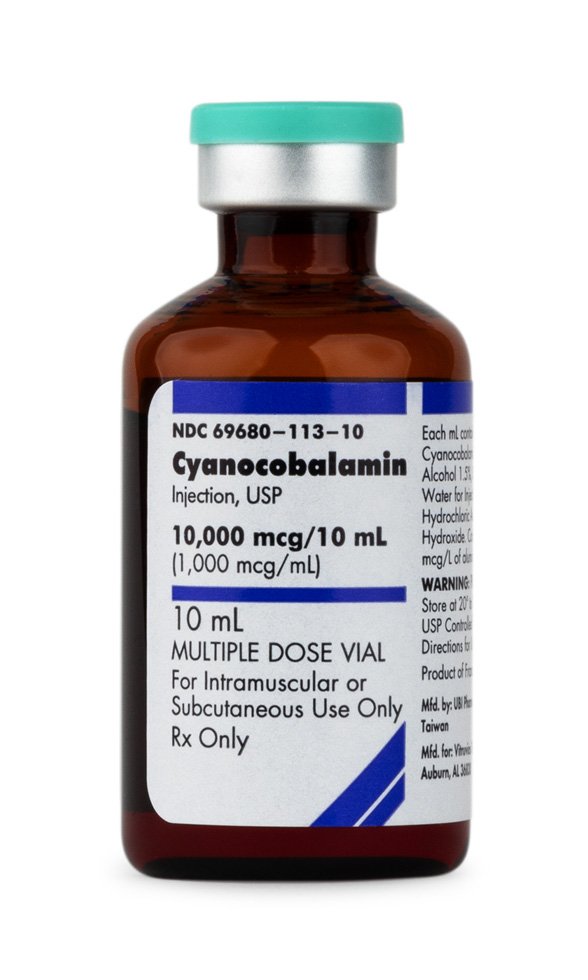
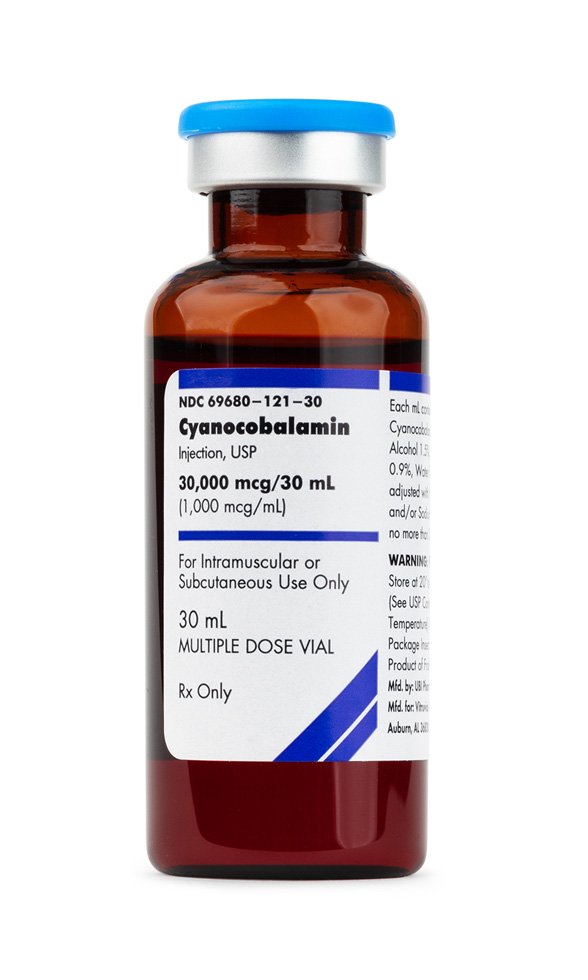
Cyanocobalamin (vitamin B12) injection is a sterile, prescription-only parenteral formulation of a water-soluble cobalamin analogue that serves as the principal therapeutic option when oral absorption of the vitamin is impaired or when rapid repletion is clinically required. It is dispensed in amber multidose vials containing 1,000 mcg/mL and compounded for use under either section 503A or 503B, allowing clinicians to individualize therapy for deficiency states ranging from pernicious anemia to postsurgical malabsorption.
Because intrinsic-factor-dependent uptake in the distal ileum can be absent in conditions such as autoimmune gastritis, pancreatic insufficiency, or bariatric surgery, the intramuscular or subcutaneous route bypasses gastrointestinal barriers and reliably restores serum concentrations. The product is likewise indicated for increased physiologic demand (pregnancy, thyrotoxicosis, chronic hemorrhage), for drug-induced depletion, and for select neurologic or hematologic disorders in which B12 plays a pivotal metabolic role.
Pharmacokinetic studies demonstrate rapid systemic distribution with peak plasma levels occurring within 30-60 minutes of intramuscular injection, followed by extensive hepatic storage and enterohepatic recycling; roughly 50-98 % of an administered dose is renally excreted unmetabolized, underscoring the compound’s low intrinsic toxicity.
Compounded preparations must conform to current good-manufacturing-practice standards, including preservative disclosure, particulate testing, and labeling that emphasizes prescription status, sterile handling, and avoidance of inadvertent intravenous administration.
Initial treatment of pernicious anemia typically consists of 1,000 mcg intramuscularly daily for one week, then weekly for four weeks, transitioning to 1,000 mcg monthly for life;
alternative protocols (e.g., 100 mcg every other day) may be selected based on clinical response and laboratory indices.
For nutritional deficiency without intrinsic-factor loss, shorter courses-such as 30-100 mcg intramuscularly daily for five to ten days followed by 100-200 mcg monthly-are often sufficient; pediatric and intranasal regimens are detailed in specialized dosing references and should be individualized.
Within cells, cyanocobalamin is converted to methylcobalamin and 5- deoxyadenosylcobalamin, coenzymes that participate respectively in homocysteine remethylation to methionine and in the isomerization of methylmalonyl-CoA to succinyl CoA, reactions essential for DNA synthesis, erythropoiesis, and myelin maintenance.
Disruption of these pathways leads to accumulation of homocysteine and methylmalonic acid, metabolic signatures linked to megaloblastic anemia and demyelinating neuropathy; repletion reverses hematologic symptoms within days and neurologic sequelae over weeks, reflecting differential tissue turnover.
After parenteral delivery, cyanocobalamin binds transcobalamin II, permitting receptor mediated endocytosis into virtually all nucleated cells; intracellular half-life is prolonged because of lysosomal release and cytosolic resequestration, creating a depot effect that supports monthly maintenance dosing for chronic deficiencies.
Population pharmacokinetic modeling reveals a biphasic disposition (distribution half-life 15-30 minutes; terminal half-life 20-50 minutes) with a steady-state volume approximating total extracellular fluid, findings that justify loading schedules followed by less frequent injections once tissue stores exceed 2 mg.
Absolute contraindications include prior hypersensitivity to cyanocobalamin, cobalt, or formulation excipients; anaphylaxis, though rare, necessitates immediate discontinuation and emergency management.
Visual disturbances have been reported in patients with Leber hereditary optic neuropathy, and rapid B12 administration may precipitate optic nerve atrophy in this genetically predisposed population, mandating extreme caution or alternative therapy.
Relative contraindications encompass early polycythemia vera, tobacco amblyopia, and concurrent sensitivity to benzyl alcohol used as a preservative; in such settings the risk benefit ratio should be reassessed, and preservative-free preparations considered.
Long-term metformin therapy reduces calcium-dependent intrinsic-factor binding, lowering B12 absorption and potentially necessitating higher or more frequent parenteral doses; periodic monitoring is prudent.
Gastric acid-suppressing agents (proton-pump inhibitors and H₂-receptor antagonists) diminish dietary B12 liberation from protein complexes, a pharmacodynamic interaction that can exacerbate underlying deficiency.
Chloramphenicol has been shown to blunt reticulocyte response to cyanocobalamin, while ethanol, colchicine, and nitrous oxide interfere with cobalamin metabolism or utilization, each warranting clinician awareness when evaluating suboptimal treatment outcomes.
The injection is generally well tolerated; common reactions include transient pain, erythema, or pruritus at the administration site, along with mild diarrhea, headache, or nausea in a minority of recipients.
Serious but infrequent events-such as angioedema, bronchospasm, hypotension, or urticaria-reflect IgE-mediated hypersensitivity and may require desensitization or substitution with hydroxocobalamin.
Although cyanocobalamin lacks a defined upper-toxicity threshold due to its water solubility and renal elimination, exceptionally high cumulative doses have been temporally associated with acneiform eruptions, altered potassium homeostasis, and theoretical thrombotic risk, emphasizing the importance of evidence-based dosing.
Physiologic B12 requirements increase during gestation, and parenteral cyanocobalamin is considered appropriate when dietary intake or intestinal absorption is inadequate; limited human data reveal no teratogenicity at therapeutic doses, yet clinicians are advised to employ the lowest effective regimen.
Lactation studies demonstrate that maternal injections modestly elevate breast-milk B12 concentrations without adverse infant outcomes, supporting compatibility with breastfeeding while underscoring the need for maternal repletion to prevent neonatal deficiency.
Cyanocobalamin vials should be stored at controlled room temperature (15 – 25 °C), protected from excessive light and humidity, and kept in their original packaging to preserve potency; freezing must be avoided to prevent crystal formation and loss of sterility assurance.
Refrigeration is not strictly required but may prolong shelf life if temperature excursions are common; when cooled, vials must be allowed to reach ambient temperature before use to minimize syringe air bubble formation and injection discomfort.