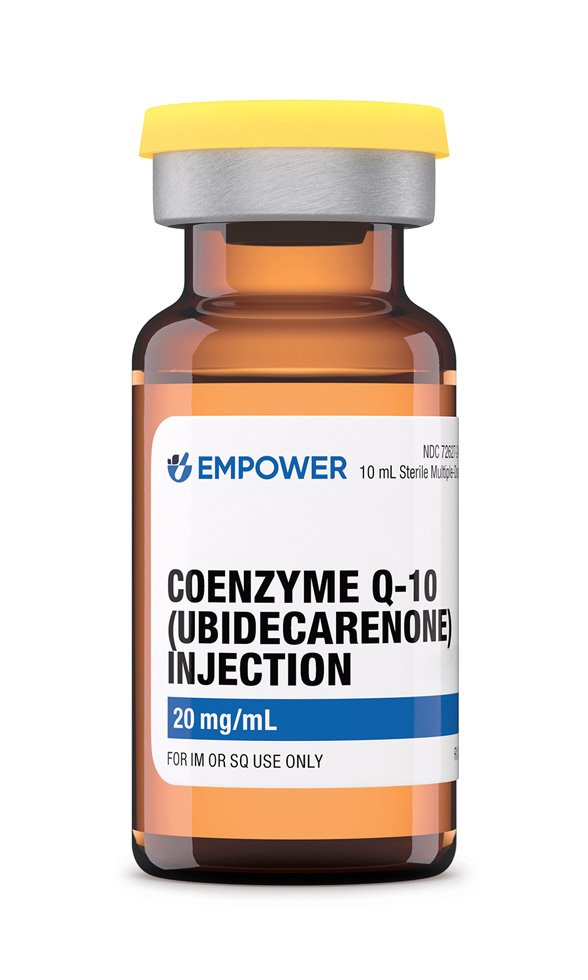
Coenzyme Q10 (CoQ10) Injection is a compounded prescription medication containing the antioxidant coenzyme Q10 as the active ingredient. It is typically formulated at a concentration of 20 mg/mL in a 10 mL vial with a grapeseed oil base for intramuscular use. As a 503A or 503B compounded preparation, it is made on a prescription or office use basis for patients under U.S. FDA regulations.
CoQ10 is a fat-soluble, vitamin-like coenzyme found naturally in every cell, with especially high levels in energy-intensive organs like the heart, liver, and kidneys. It plays a critical role in cellular energy production by facilitating electron transfer within mitochondria, and it also functions as a potent antioxidant.
Clinically, CoQ10 supplementation has been explored for a wide range of conditions related to suboptimal cellular energy metabolism and oxidative stress. It is often used as an adjunct to support cardiovascular health (e.g. in heart failure or cardiomyopathy), neurodegenerative disorders such as Parkinson’s disease, migraines, and certain fertility or metabolic conditions.
However, CoQ10 lacks FDA approval for the treatment of any specific medical condition and current research evidence for its efficacy in many of these uses remains inconclusive. Nonetheless, it is generally regarded as a well-tolerated supplement and is commonly recommended by healthcare providers in appropriate scenarios.
There is no one-size-fits-all dosage for CoQ10 Injection; the dose and frequency are individualized based on the patient’s needs and the treating provider’s discretion. The compounded injection is available as 20 mg/mL in a 10 mL vial, and it is intended for intramuscular administration (intravenous use of this oil-based formulation is contraindicated). In practice, a common regimen might involve injecting 1 mL (20 mg of CoQ10) intramuscularly once or twice per week, or as directed by the healthcare provider, although dosing can vary widely with clinical context. Therapy is typically started at a low dose to gauge tolerance, and the dose or frequency may be adjusted according to the patient’s response and CoQ10 blood levels if those are being monitored.
For comparison, oral CoQ10 supplementation in adults often ranges from about 50 mg to 300 mg per day (in divided doses) for general health support, and much higher doses (hundreds of milligrams daily) have been used in clinical trials for specific conditions like Parkinson’s disease or mitochondrial disorders. Because intramuscular injection bypasses the digestive system, it achieves 100 % bioavailability of CoQ10, so doses by injection may be lower than equivalent oral doses.
Nonetheless, no official standardized dosing exists for the injectable form, and clinicians will tailor the dosing schedule to the individual patient. Patients should always follow the dosing instructions provided by their prescriber. CoQ10’s effects on the body are gradual, so therapy may be continued for several weeks or months, with periodic re-evaluation of the patient’s condition and CoQ10 levels as needed to determine the optimal dosage and duration of treatment.
CoQ10 is integral to the mechanism of cellular energy production. It serves as a coenzyme in the mitochondrial oxidative phosphorylation pathway, shuttling electrons between complexes I/II and complex III of the electron transport chain to generate adenosine triphosphate (ATP). In doing so, CoQ10 helps maintain efficient energy output in cells.
Beyond its bioenergetic role, CoQ10 in its reduced form (ubiquinol) acts as an antioxidant, protecting cells from oxidative damage by scavenging free radicals and preventing lipid peroxidation. It also stabilizes membranes and supports endothelial function by preserving nitric oxide availability, thereby contributing to improved blood flow.
Through these actions, CoQ10 Injection can bolster cellular energy levels and reduce oxidative stress, which is particularly beneficial in conditions associated with CoQ10 deficiency or high oxidative demand.
CoQ10 Injection has no known absolute contraindications apart from hypersensitivity to CoQ10 itself or any of the formulation’s components. Patients with a history of allergic reactions to coenzyme Q10 or to excipients (such as the grapeseed oil vehicle) should not use this therapy.
While not absolute contraindications, caution is advised in certain populations due to limited data: for example, its use in very young pediatric patients or in individuals with specific medical conditions should be guided by a physician’s judgement.
In all cases, CoQ10 should be avoided in anyone who has demonstrated an allergy to this compound or similar quinones in the past.
CoQ10 may interact with several medications, so a healthcare provider should review all concurrent drugs before initiating therapy. Notably, CoQ10 can diminish the effectiveness of warfarin and other anticoagulants: because CoQ10 is structurally similar to vitamin K, it may reduce warfarin’s anticoagulation effect, potentially increasing the risk of blood clots. Patients on warfarin should have their coagulation parameters closely monitored if CoQ10 is started or adjusted.
CoQ10 also has mild blood pressure-lowering properties and can have an additive effect with antihypertensive medications, possibly leading to excessive drops in blood pressure. Similarly, CoQ10 might enhance the blood-sugar-lowering effects of insulin or oral hypoglycemic drugs, so glucose levels should be watched in diabetic patients.
There is also a theoretical concern that CoQ10’s antioxidant effects could interfere with certain chemotherapy or radiation treatments, so patients undergoing cancer therapy should use CoQ10 only under medical supervision.
In summary, while serious drug interactions are uncommon, CoQ10 users should consult their healthcare provider, as dosage adjustments or enhanced monitoring may be necessary when combining CoQ10 with blood thinners, blood pressure medications, diabetes medications, or cancer therapies.
CoQ10 Injection is generally well tolerated. Most side effects, if they occur, tend to be mild and transient. Commonly reported side effects include gastrointestinal disturbances such as nausea, stomach upset, diarrhea, or loss of appetite.
Some individuals have noted central nervous system-related symptoms like headache, dizziness, or mild insomnia, especially at higher doses. Occasional skin reactions (rashes or itching) have been observed in a few cases.
Because this formulation is administered by intramuscular injection, there can also be localized injection site reactions, such as pain, redness, or bruising at the injection site (as with any intramuscular shot).
Overall, the incidence of side effects is low: large studies and reviews have found CoQ10 to be a compound with a favorable side effect profile. Patients are advised to report any unexpected or persistent adverse effects to their healthcare provider.
Use of CoQ10 Injection during pregnancy requires caution due to insufficient research on its safety in pregnant or nursing women. CoQ10 is classified as a dietary supplement and has not been studied in large clinical trials for safety in pregnancy. While no teratogenic or toxic effects have been reported in the limited human data available, the evidence is not sufficient to consider it definitively safe for expectant mothers.
Some small studies of oral CoQ10 supplementation in pregnancy (for example, in women at risk for pre-eclampsia) have suggested potential benefits and did not identify safety concerns, but these results are preliminary and not conclusive. Therefore, CoQ10 should be used during pregnancy only if the potential benefit justifies the potential risk, and always under the guidance of a qualified healthcare professional.
The same precaution applies to breastfeeding: it is unknown whether significant amounts of CoQ10 could be transferred through breast milk, so nursing mothers should consult their physicians before using CoQ10.
In summary, until more data are available, CoQ10 in any form is generally not recommended in pregnant or breastfeeding patients unless specifically prescribed by a physician after careful risk-benefit assessment.
Proper storage of CoQ10 Injection helps maintain its potency and sterility. Vials should be stored at controlled room temperature, typically around 20-25°C (68-77°F), and kept away from excessive heat, direct light, and moisture. Do not freeze the vial, as freezing can damage the oil-based formulation.
It is best to keep the medication in its original amber vial (to protect from light) and in a dry place. Always check the expiration or beyond-use date provided by the compounding pharmacy, and do not use the product beyond that date. Once a vial is punctured, follow your pharmacist’s guidance on how long it may be safely used (some compounded sterile preparations may have a limited usable period after first use).
Keep CoQ10 vials out of reach of children and store them securely to prevent any contamination. Before each use, inspect the solution: if you notice particulate matter, cloudiness, or any change in color from its normal appearance, do not use the vial and contact the pharmacy.
By adhering to storage recommendations, patients can ensure the medication remains stable and effective for the duration of its intended use.