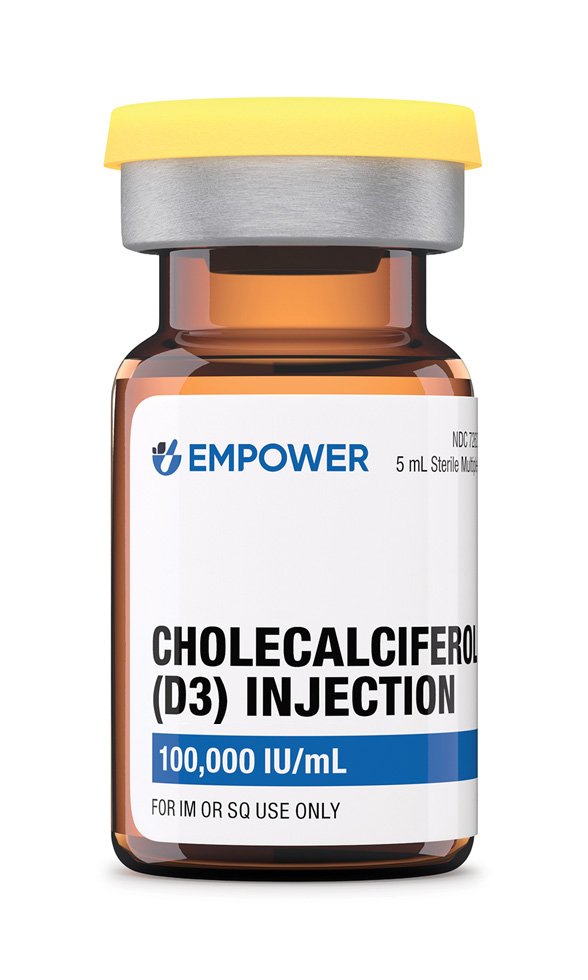
Cholecalciferol (Vitamin D₃) Injection 100,000 IU/mL is a sterile, oil-based compounded solution prepared in grapeseed oil for deep intramuscular use when patients require rapid or dependable vitamin D repletion because oral preparations are ineffective, poorly absorbed, or impractical. Each 5 mL vial contains a total of 500,000 IU of vitamin D₃ suspended in an antioxidant-rich plant oil that is well tolerated by muscle tissue. Pharmacies operating under section 503A compound the medication for patient-specific prescriptions, whereas a registered 503B outsourcing facility can prepare office-use stock for clinics that administer injections on site, ensuring current Good Manufacturing Practice and USP <797> compliance.
High-dose intramuscular administration creates a tissue depot that releases vitamin D slowly over weeks, potentially enabling a single injection to lift serum 25-hydroxyvitamin D levels into the sufficient range in severe deficiency and to potentially support bone mineralisation, neuromuscular function, and secondary hyperparathyroidism reversal while bypassing the gastrointestinal tract.
A common repletion strategy in profoundly deficient adults involves 100,000 IU intramuscularly every four weeks for two or three doses or a one-off 300,000 IU injection followed by oral maintenance; experienced endocrinologists may individualise based on baseline 25-hydroxyvitamin D, body mass, malabsorption severity, and season.
Serum 25-hydroxyvitamin D, calcium, phosphate, and parathyroid hormone are re-examined at least eight weeks after each injection, and maintenance may shift to oral 1,000-2,000 IU daily once target levels (generally 30-50 ng mL ⁻¹) are achieved, thereby reducing the risk of cumulative overdose while safeguarding skeletal health.
If a scheduled injection is missed, patients should arrange administration as soon as practicable and resume the original calendar rather than double the dose; they should avoid unsupervised over-the-counter vitamin D products because combined intake can unknowingly exceed tolerable upper limits.
After the solution is deposited into muscle, cholecalciferol diffuses into the circulation bound to vitamin-D-binding protein and undergoes 25-hydroxylation in hepatocytes, yielding 25-hydroxyvitamin D, the principal circulating biomarker of status.
The second activation step takes place predominantly in the kidneys where 1α-hydroxylase converts 25-hydroxyvitamin D to 1,25-dihydroxyvitamin D (calcitriol), an active secosteroid hormone that binds nuclear receptors in enterocytes, osteoblasts, renal tubules, parathyroid cells, and numerous immune and endocrine cells to modulate hundreds of genes involved in calcium-phosphate homeostasis, skeletal remodelling, and immunoregulation.
Administering 100,000 IU intramuscularly establishes a high-capacity depot that may correct deficiency more predictably than oral dosing in malabsorption syndromes and maintains adequate circulating vitamin D over two to three months, an approach often referred to as ‘Stoss therapy’ in endocrinology.
Absolute contraindications include hypercalcaemia, hypervitaminosis D, idiopathic infantile hypercalcaemia, or documented hypersensitivity to vitamin D₃ or components of the oil vehicle because additional vitamin D would worsen calcium overload or provoke severe allergic reactions.
Clinicians should exercise extreme caution in advanced chronic kidney disease or sarcoidosis, tuberculosis, and other granulomatous disorders where extrarenal 1α-hydroxylase activity can generate excess calcitriol and precipitate hypercalcaemia even at modest serum 25-hydroxyvitamin D concentrations.
Patients receiving cardiac glycosides, particularly digoxin, may develop life-threatening arrhythmias if hypercalcaemia occurs; pregnancy and lactation warrant specialist oversight since megadose therapy is generally reserved for severe, documented deficiency that cannot be corrected by standard oral supplementation.
Concomitant administration of large calcium supplements, thiazide diuretics, or aluminium-containing phosphate binders can potentiate vitamin D-mediated increases in serum calcium or phosphate, demanding periodic laboratory monitoring and dosage adjustments to avert nephrolithiasis or ectopic calcification.
Enzyme-inducing anticonvulsants such as phenytoin, carbamazepine, and phenobarbital, as well as rifampicin, accelerate hepatic catabolism of vitamin D, shortening its half-life and potentially necessitating more frequent or higher intramuscular doses to sustain target 25-hydroxyvitamin D levels.
Bile-acid sequestrants and orlistat impair intestinal absorption of fat-soluble vitamins, explaining why some patients switch to parenteral therapy, whereas magnesium-containing antacids and digoxin can synergise with vitamin D to provoke hypermagnesaemia or digitalis toxicity if calcium rises unchecked.
Most recipients experience no systemic symptoms; however, transient injection-site pain, mild headache, gastrointestinal upset, or fatigue can occur, and patients should be counselled to report persistent anorexia, constipation, or polyuria that may herald rising serum calcium.
Vitamin D toxicity presents chiefly as sustained hypercalcaemia with nausea, vomiting, muscle weakness, neurocognitive changes, or arrhythmias, progressing to nephrocalcinosis if untreated; toxicity remains rare when clinicians restrict injections to clinically indicated doses and monitor biochemical profiles.
Very high cumulative exposure over months may encourage calcium deposition in soft tissues such as the renal parenchyma or coronary arteries, an outcome implicated in observational studies linking supra-physiological 25-hydroxyvitamin D levels with vascular calcification and heightened fracture risk in frail elders.
Physiological vitamin D sufficiency is vital for placental function, foetal bone accretion, and maternal skeletal health, yet professional bodies caution against parenteral megadose therapy during uncomplicated gestation, preferring daily or weekly oral regimens that allow tighter titration and minimise abrupt calcium flux.
Small clinical trials indicate that maternal supplementation of 4,000 IU day ⁻¹ or staggered 50,000 IU oral doses can safely maintain 25-hydroxyvitamin D above 30 ng mL ⁻¹ without inducing hypercalcaemia, whereas single injections of 300,000 IU are reserved for severe malabsorption emergencies when benefits outweigh theoretical teratogenic risk.
During lactation, parenteral vitamin D markedly raises breast-milk concentrations and can support infant status, yet guidelines still advocate infant drops of 400 IU day ⁻¹ and recommend maternal monitoring to ensure neither mother nor child approaches toxic thresholds.
Vials should be stored upright at 20-25 °C in the original light-resistant container, protected from moisture and heat sources, and gently rolled between the palms to redissolve any oil stratification before withdrawal without vigorous shaking that can introduce air bubbles.