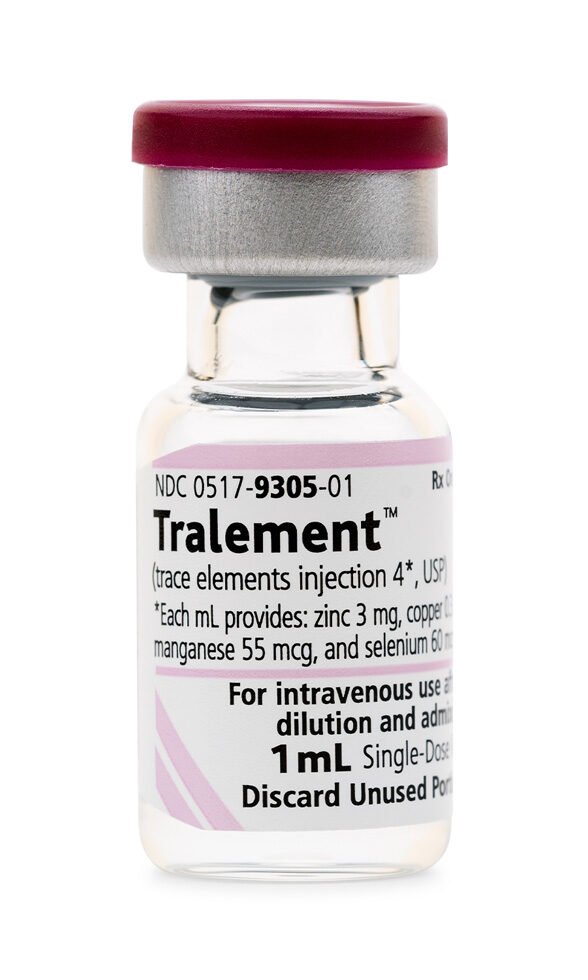
Tralement Injection is a sterile, fixed-ratio solution supplying four physiologically required trace minerals-zinc (3 mg mL⁻¹), copper (0.3 mg mL⁻¹), manganese (55 µg mL⁻¹) and selenium (60 µg mL⁻¹)-formulated for addition to parenteral-nutrition admixtures when enteral intake is impossible or inadequate. The preparation is intended to maintain or restore trace-element balance in patients receiving total parenteral nutrition (TPN), a group whose gastrointestinal losses, lack of oral intake, and altered renal handling can precipitate clinically significant micronutrient depletion. Trace-element deficiency during prolonged intravenous feeding may manifest as impaired wound healing, compromised innate and adaptive immunity, anemia, dermatologic changes, growth retardation, or neurologic dysfunction; conversely, excessive supplementation risks tissue accumulation and organ toxicity, underscoring the need for physiologic replacement rather than pharmacologic dosing,. By combining the four elements in proportions aligned with contemporary adult and pediatric recommendations, Tralement offers a single-vial strategy that simplifies compounding workflow and reduces preparation errors while delivering nutrients essential to antioxidant defense, connective-tissue biosynthesis, endocrine function, and myriad metallo-enzyme reactions.
For adults weighing at least fifty kilograms, the typical dose is 1 mL of Tralement added to the daily PN admixture, delivering the approximate basal requirements of each trace metal as endorsed by professional nutrition societies. Pediatric dosing from ten to forty-nine kilograms is weight-based at 0.2 mL kg⁻¹ day⁻¹, whereas infants below ten kilograms require individualized single-element formulations because the fixed ratio may not align with neonatal needs; geriatric patients receive the adult dose with heightened attention to hepatic and renal indices guiding ongoing adjustment.
Zinc in Tralement acts as an obligatory cofactor for more than three hundred enzymes and multiple transcription factors, influencing DNA and RNA polymerases, cellular proliferation, and the inflammatory response; intravenous replacement maintains plasma zinc in the face of urinary wasting and absent enteral absorption. Copper participates in redox catalysis within cuproenzymes such as cytochrome c oxidase, dopamine β-hydroxylase, lysyl oxidase, and ceruloplasmin, thereby supporting oxidative phosphorylation, neurotransmitter synthesis, connective-tissue cross-linking, and iron mobilization; inclusion of copper averts the hematologic and neurologic sequelae of deficiency while providing only trace quantities that the hepatobiliary system can excrete under normal physiology. Manganese serves as the metal nucleus for mitochondrial superoxide dismutase and several hydrolases involved in carbohydrate, lipid, and amino-acid metabolism; the 55 µg dose approximates basal daily requirements, reducing risk of either deficiency-related skeletal abnormalities or cholestasis-related accumulation. Selenium is incorporated as selenocysteine into glutathione peroxidases, thioredoxin reductases, and deiodinases, conferring antioxidant protection and modulating thyroid hormone activation; parenteral administration compensates for losses in dialysis effluent or gastrointestinal secretions while staying below thresholds associated with selenosis. Together, the four elements act synergistically to sustain redox balance, immune competence, and tissue repair in patients wholly dependent on intravenous nutrition.
Use of Tralement is contraindicated in individuals with documented hypersensitivity to any component, because trace-metal anaphylaxis-though rare-can provoke cutaneous eruptions, hypotension, or bronchospasm. The product should not be administered undiluted or by direct intravenous push; rapid infusion of concentrated trace metals may provoke local venous irritation, thrombophlebitis, or acute trace-element spikes that overwhelm albumin-binding capacity. Patients with Wilson’s disease, primary biliary cholangitis, or other severe cholestatic disorders require caution, as impaired biliary excretion predisposes to copper and manganese accumulation; serial serum levels and neurologic surveillance are advised in such settings.
Compatibility within the parenteral-nutrition admixture is paramount: divalent copper can catalyze oxidation of ascorbic acid in multivitamin preparations, and excessive phosphate may precipitate with zinc or manganese-hence vitamins are customarily injected immediately before administration and calcium-phosphate ratios are carefully balanced. Oral fluoroquinolone or tetracycline antibiotics chelate with enteral zinc, diminishing antimicrobial bioavailability; if concurrent enteral medications are required during transition off TPN, clinicians should stagger zinc-containing products by at least two hours,. High-dose selenium supplements taken separately from the PN bag increase cumulative exposure and should be reviewed to avoid exceeding tolerable upper intake levels.
When compounded and infused correctly, Tralement is generally well tolerated; the most common adverse reactions are mild infusion-site pain or catheter-related phlebitis, phenomena attributable more to hyperosmolar PN solutions than the trace-element component. Chronic over-supplementation may manifest as gastrointestinal upset or immunologic suppression with zinc, cholestatic neurotoxicity resembling parkinsonism with manganese, garlic-like breath odor and brittle nails with selenium, or hepatic iron accumulation owing to ceruloplasmin saturation when copper is excessive. Immediate discontinuation and diagnostic work-up are mandated if hypersensitivity reactions-urticaria, wheezing, or hypotension-occur during infusion.
Well-controlled studies of Tralement in pregnant persons are lacking; nevertheless, trace-element replacement at recommended parenteral doses is considered physiologic, and deficiency poses its own fetal risks, including impaired growth and immune compromise.
Animal data reveal teratogenicity only at selenium intakes several hundred-fold above human requirements; therefore, the preparation may be used when maternal benefit outweighs potential hazard, provided serum trace-element concentrations are monitored and doses kept at the minimum effective level.
Unopened Tralement vials should be stored at controlled room temperature-20 °C to 25 °C with brief excursions permitted between 15 °C and 30 °C-and protected from prolonged light exposure to limit photo-oxidation. Once transferred into a compounded PN bag, the admixture is refrigerated at 2 °C to 8 °C and infused within twenty-four hours to preserve chemical stability and sterility; unused portions are discarded in accordance with institutional hazardous-waste protocols because trace metals can accumulate in the environment.