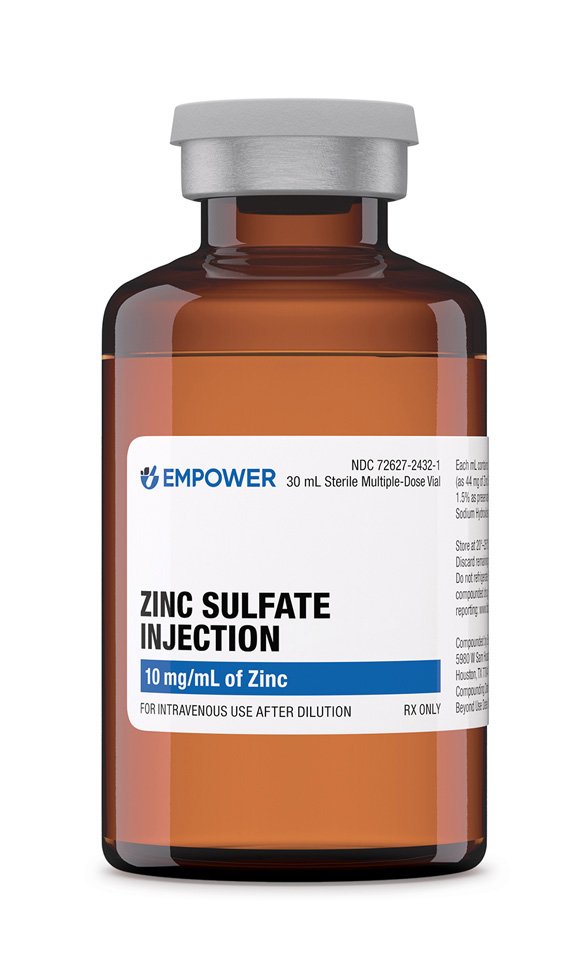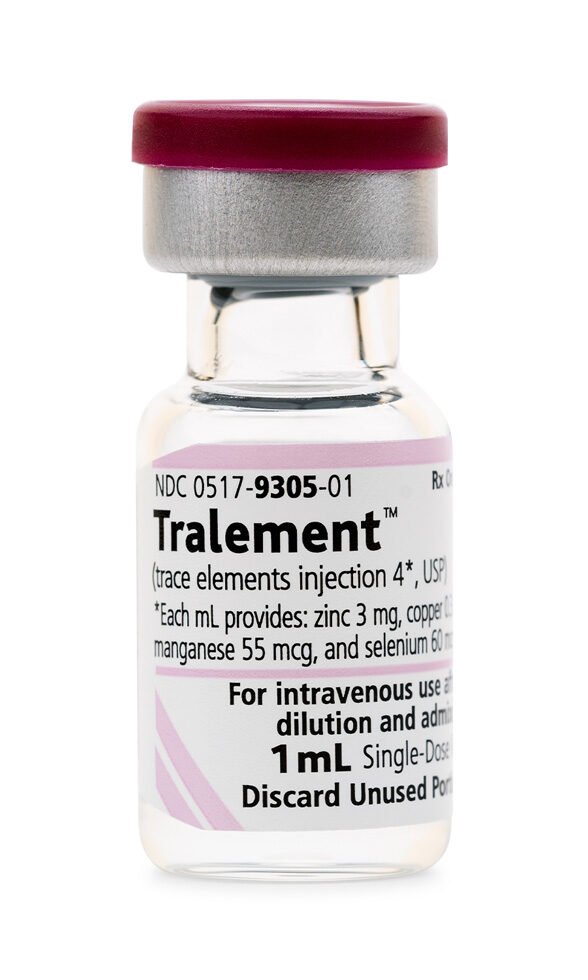
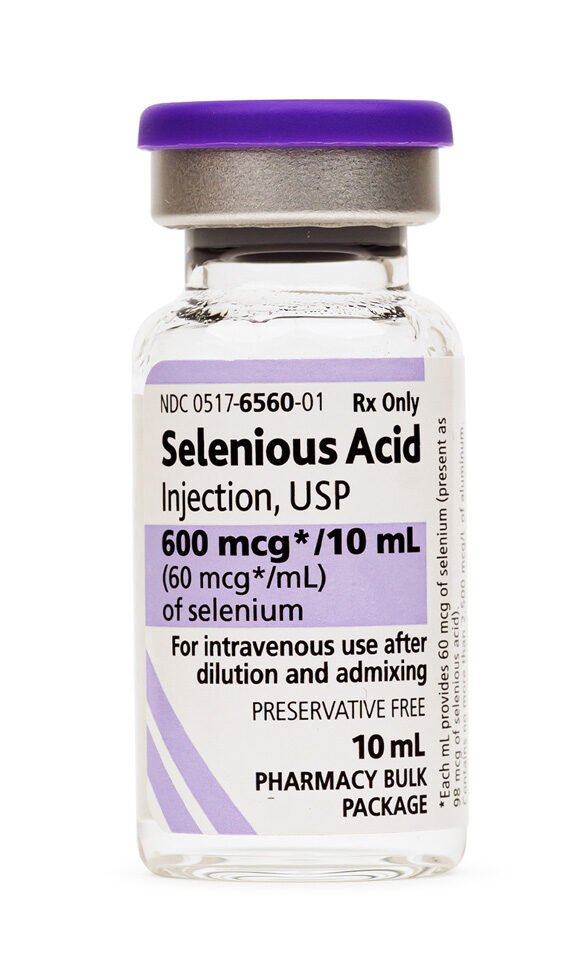
Selenium Injection is a sterile, preservative-free, aqueous solution of selenious acid intended exclusively as a parenteral trace-element source for patients who cannot meet selenium requirements enterally or orally. At a nominal concentration of 60 mcg/mL supplied in a 10 mL vial, it is dispensed by a registered 503B outsourcing facility for admixture into individualized parenteral-nutrition formulations rather than for direct intravenous infusion.¹ The injectable preparation addresses the well-characterized risk of selenium depletion that accompanies prolonged dependence on parenteral nutrition, critical illness, severe gastrointestinal malabsorption, or extensive bowel resection, circumstances in which endogenous stores fall rapidly without trace-element supplementation.,
Selenium is an essential micronutrient incorporated as the amino acid selenocysteine into at least twenty-five human selenoproteins that participate in antioxidant defense, thyroid-hormone activation, redox signaling, and immune modulation., In systemic deficiency, clinical manifestations may include cardiomyopathy, altered thyroid function, impaired fertility, myopathy, and immune dysfunction, underscoring the need for reliable parenteral replacement when enteral routes are inadequate.
Professional societies recommend routine selenium addition to adult and pediatric parenteral-nutrition admixtures at dosage levels calibrated to age and clinical condition; omission or under-dosing has been associated with biochemical deficiency within weeks, whereas appropriate parenteral provision reverses deficits and restores plasma glutathione-peroxidase activity.
Because this formulation is compounded under section 503B, it is produced in accordance with current good manufacturing practices, subjected to sterility, potency, and endotoxin testing, and dispensed only on the order of a licensed prescriber for administration in healthcare settings that can monitor serum selenium concentrations, renal function, and signs of toxicity or trace-element imbalance.
The Pharmacy Bulk Package contains 600 mcg selenium per 10 mL (60 mcg/mL). It is not intended for direct infusion. The adult maintenance dose in stable patients receiving total parenteral nutrition is typically 60 mcg/day, while critically ill or burn patients may require up to 100 mcg/day under laboratory guidance., Pediatric dosing is weight-based: 2 mcg/kg/day (maximum 60 mcg) for those ≥7 kg and 2-4 mcg/kg/day for very low-birth-weight infants. Weight, renal function, and concurrent dietary selenium should inform individualized adjustments, and plasma selenium should be reassessed at least weekly in long-term therapy.
Intravenously administered selenious acid is immediately reduced in plasma and cellular compartments to selenide, incorporated into selenocysteine, and co-translationally inserted into selenoproteins such as the glutathione-peroxidase (GPx) family and thioredoxin-reductases, which collectively catalyze the reduction of hydrogen- and lipid-peroxides, thereby limiting oxidative injury to cellular membranes, DNA, and protein targets.
Meta-analytic data in critically ill cohorts show that supraphysiologic intravenous selenium transiently augments GPx activity and may blunt inflammatory cytokine surges, although mortality benefit has not been consistently demonstrated and toxicity rises sharply beyond 2,000 mcg/day. The antioxidant effect is complemented by modulation of redox-sensitive transcription factors (e.g., NF-κB) and preservation of endothelial nitric-oxide synthase coupling, which together may improve microvascular perfusion under stress.
Experimental work in mammalian models confirms that adequate selenium availability is indispensable for normal embryogenesis, post-natal growth, and neurodevelopment; selenium deficiency down-regulates GPx and exacerbates oxidative stress, whereas supplementation restores redox balance and supports organogenesis.
At the molecular level, selenium can substitute for sulfur in cysteine residues, altering protein tertiary structure and reactivity; this unique chemistry underlies the high catalytic efficiency of seleno-enzymes while also explaining potential pro-oxidant effects if unbound selenium accumulates above physiological levels.
Selenium competes for redox-cycling pathways and may alter the efficacy or toxicity of concurrently administered chemotherapeutics. Preclinical data show that selenite forms plasma and renal complexes with cisplatin, mitigating nephrotoxicity without attenuating cytotoxic activity, yet these findings warrant vigilant monitoring of therapeutic indices when high-dose selenium is co-infused with platinum agents.
In oncology protocols, ongoing trials are assessing whether peri-infusional selenium at 2,000 mcg/day prevents chemotherapy-induced peripheral neuropathy without compromising tumor control; preliminary pharmacokinetic modeling suggests additive antioxidant protection but underscores a narrow therapeutic window.
Selenium may potentiate the anticoagulant effect of warfarin through glutathione-dependent modulation of vitamin K epoxide reductase; dose adjustments guided by international-normalized ratio are advised. Concurrent zinc or copper supplementation can influence selenium absorption and distribution, necessitating holistic trace-element balancing in complex nutrition regimens.
Within recommended parenteral-nutrition doses (60-100 mcg/day adults, weight-based in pediatrics), adverse reactions are uncommon; nonetheless, high-dose bolus studies report transient restlessness, flushing, metallic taste, and gastrointestinal discomfort. Repeated doses exceeding 400 mcg/day can produce alopecia, brittle nails, peripheral neuropathy, and selenosis characterized by garlic-odor breath and dermatologic eruptions.
Neonatal case series document that omission of selenium from long-term parenteral nutrition leads to growth retardation and cardiomyopathy, whereas supplementation reverses biochemical and clinical deficits without significant toxicity, highlighting a clear risk-benefit favoring judicious use in this population.
An Institute for Safe Medication Practices Canada bulletin describes a fatal iatrogenic overdose when compounding calculations were mis-transcribed by three orders of magnitude, illustrating that mislabeling or unit conversion errors with microgram quantities can have catastrophic consequences.
In healthy adults, dietary excess beyond 400 mcg/day is associated with nail brittleness, gastrointestinal upset, and neurocognitive complaints; these manifestations resolve upon dose reduction, underscoring the importance of routine serum monitoring in patients receiving compounded injectable products.
Within recommended parenteral-nutrition doses (60-100 mcg/day adults, weight-based in pediatrics), adverse reactions are uncommon; nonetheless, high-dose bolus studies report transient restlessness, flushing, metallic taste, and gastrointestinal discomfort. Repeated doses exceeding 400 mcg/day can produce alopecia, brittle nails, peripheral neuropathy, and selenosis characterized by garlic-odor breath and dermatologic eruptions.
Neonatal case series document that omission of selenium from long-term parenteral nutrition leads to growth retardation and cardiomyopathy, whereas supplementation reverses biochemical and clinical deficits without significant toxicity, highlighting a clear risk-benefit favoring judicious use in this population.
An Institute for Safe Medication Practices Canada bulletin describes a fatal iatrogenic overdose when compounding calculations were mis-transcribed by three orders of magnitude, illustrating that mislabeling or unit conversion errors with microgram quantities can have catastrophic consequences.
In healthy adults, dietary excess beyond 400 mcg/day is associated with nail brittleness, gastrointestinal upset, and neurocognitive complaints; these manifestations resolve upon dose reduction, underscoring the importance of routine serum monitoring in patients receiving compounded injectable products.
Physiologic selenium requirements rise modestly during gestation owing to increased selenoprotein synthesis in the developing fetus and placenta. Population data indicate that adequate maternal selenium status correlates with reduced incidence of thyroid autoimmunity and pre-eclampsia, yet controlled trials of high-dose supplementation have yielded mixed obstetric outcomes, and expert panels do not recommend parenteral selenium beyond standard nutritional allowances unless deficiency is documented.
Consumer-level guidance cautions that both insufficiency and excess may adversely affect fetal neurodevelopment and glucose metabolism; thus, clinicians should individualize parenteral dosing, target mid-normal serum concentrations, and avoid empirical megadose strategies.
Animal and epidemiologic studies suggest that oxidative-stress mitigation by glutathione-peroxidase protects placental tissue; however, rodent experiments show teratogenicity at extreme doses, reinforcing the need for vigilant therapeutic drug monitoring when intravenously supplementing pregnant patients.
Unopened vials should be stored at 20-25 °C (68-77 °F). After the closure is penetrated, aseptic transfer to a parenteral-nutrition container must occur within four hours, and any unused portion discarded. The final admixture should be inspected for clarity, absence of precipitate, and phase integrity before infusion. Solutions exceeding 900 mOsm/L must be infused through a central venous catheter to minimize phlebitis and thrombosis risk.