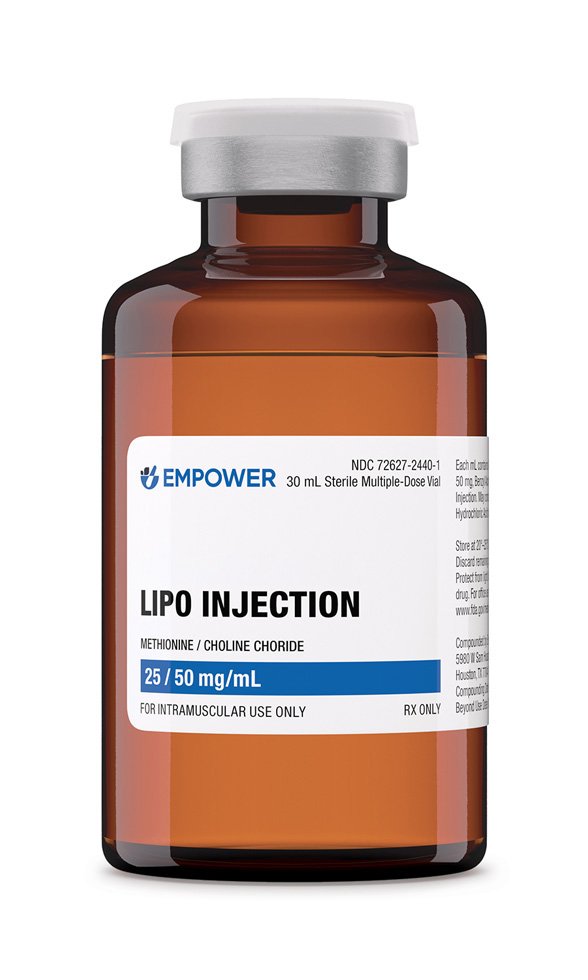
Lipotropes are compounds that may aid in the breakdown of body fat by acting on lipid metabolism and synthesis pathways. When used in combination with lifestyle modifications such as exercise and diet, lipotropic compounds may promote fat and weight loss.
Lipotropic compounds including vitamins, nutrients, and other natural or pharmacological agents may be administered as injections or in the form of oral supplements. Injections provide the advantage of better bioavailability by avoiding enzymes in the gastrointestinal tract. In addition, injections may be especially beneficial in individuals with gastrointestinal absorption issues.
The lipotropic agents in this injection are methionine and choline. While each may individually affect the mobilization of fats, the combination may provide synergistic benefits. The physiological role of each compound and the effects of supplementation are described below.
A branched-chain amino acid with sulfur is methionine. Methionine is crucial for immune system function, lipid metabolism, polyamine production, heavy metal chelation, and redox balance since it is a precursor for cellular methylation processes. In contrast, methionine limitation in the diet decreased insulin resistance in rodents and promoted adipose tissue lipolysis and fatty acid oxidation.
The metabolite S-adenosyl methionine (SAM) of methionine, which has lipotropic properties, may be responsible. Methionine is converted into SAM by a process that requires energy. For the treatment of depression, osteoarthritis, and liver conditions, SAM has been studied when taken orally or intravenously. SAM may act as a methyl donor in the metabolic processes that control lipid homeostasis, DNA stability, gene expression, and neurotransmitter release, which may account for the benefits it confers.
Choline is an essential nutrient required for optimal functioning of various tissues including the liver, muscles, and brain. Since choline breaks down fat as an energy source, choline supplementation caused rapid fat and weight loss in female athletes. Only small amounts of choline are synthesized by the human body, necessitating its intake from external sources. In the body, about 95% of the total choline pool is converted to phosphatidylcholine, an essential component of the phospholipid bilayer and the predominant phospholipid in most mammalian cells. Choline also undergoes acetylation to form the neurotransmitter acetylcholine. Choline deficiency causes hepatic steatosis (fatty liver disease) and leads to loss of muscle membrane integrity. Chronic choline deficiency may also increase the risk of developing cancer.
Both choline and methionine are a source of methyl groups for the one-carbon transmethylation pathway and serve hepato-protective functions. Culturing hepatocytes in choline and methionine-deficient media impaired VLDL secretion. In addition, choline can donate methyl groups to support methionine regeneration, possibly contributing to their synergistic lipotropic effects.
Methionine, an important amino acid containing sulfur, undergoes transmethylation processes to produce metabolic byproducts such S-adenosylmethionine (SAM) and homocysteine. SAM is an all-purpose methyl group donor that participates as a co-factor in a variety of physiological and cellular processes, including lipid homeostasis. S-adenosylhomocysteine (SAH) and homocysteine are produced when SAM donates its methyl group. SAM acts as a methyl donor, assisting in the synthesis of phosphatidylethanolamine and phosphatidylcholine. Phosphatidylcholine is stored in the liver as very low-density lipoproteins (VLDL), which are then transferred to other tissues. Low levels of SAM in the liver prevent the formation of VLDL and cause lipid accumulation in the liver, often known as fatty liver.
SAM plays a critical function in epigenetic control by encouraging DNA methylation. A well-known method of repressing transcription is methylation close to gene promoters. Consequently, SAM might serve as a sensor for the nutritional condition of the cell and epigenetically modify the expression of genes that affect hunger, glucose metabolism, and lipogenesis. In the synthesis of creatine, a high-energy molecule believed to enhance exercise, SAM serves as a methyl donor.
In its unmodified form, or after oxidation to betaine, choline reduces fat deposition and accelerates the lipid transport. Like methionine, betaine can also methylate DNA and influence gene expression. Consequently, choline and betaine methylated the promoter region of PPAR-α, suppressing mRNA expression and possibly the lipogenic actions of the encoded protein. In addition, choline inhibited obesity-induced oxidative stress and prevented hepatic accumulation of triglycerides.
In female athletes, choline supplementation significantly reduced body fat as well as levels of the hunger hormone leptin. Reduction in leptin levels are linked to greater food satiety. Thus, the dual advantage of consuming fewer calories while burning fats as an energy source may contribute to the lipotropic actions of choline.
Upcoming evidence indicates that the choline metabolite trimethylamine-N-oxide may be a risk factor for cardiovascular diseases. Studies in animal models suggest that TMAO may be atherogenic and prothrombotic. Therefore, Lipo-MIC injections are contraindicated in individuals with cardiovascular disorders. S-adenosyl methionine may worsen the symptoms of mania in people with bipolar disorder. Consult a physician before use.
S-adenosyl methionine (SAM), a methionine metabolite, may interact with opioids, antipsychotics, amphetamines, and antidepressants to cause an overabundance of serotonin to accumulate in the body. Dextromethorphan, a cough suppressant, and St. John’s wort, a nutritional supplement, may interact with it, raising the risk of serotonin syndrome. Shivering and diarrhea are mild serotonin syndrome symptoms, but rigid muscles, fever, and seizures are severe symptoms.
Choline is not known to have any clinically relevant interactions with drugs, supplements, or foods.
Potential side effects of lipotropic injections include:
This is not a comprehensive list of adverse effects. If you experience rash, hives, itchiness, shortness of breath, or other symptoms of an allergic reaction, please discontinue use immediately and consult your physician. Side effects may vary from person to person.
There are no randomized, controlled trials studying the effect of Lipo-MIC injections on pregnant women or their offspring. Human and animal studies on each constituent compound may offer some insights.
A maternal diet high in methionine may be harmful to the development of the fetus. This is due to the possibility that more glycine and serine may be needed to properly catabolize the extra methionine, unintentionally leading to a shortage in these amino acids. Homocysteine can also be produced by the metabolism of excess methionine. Preeclampsia, placental rupture, spontaneous abortion, and miscarriage are all linked to elevated plasma homocysteine levels.
Choline requirements are exceptionally high in pregnant women. In women of reproductive age, 425 mg/day of choline is considered adequate. Adequate choline intake increases to 450 mg/day during pregnancy. Choline supplementation had beneficial effects on fetal neurodevelopment and maternal placental function. Randomized controlled studies have reported up to 900 mg/day of choline administered orally to be safe and free of adverse events in healthy pregnant women. However, too low and excessively high levels of choline may adversely affect fetal health and development. Additionally, consuming more than 3.5 g/d of choline may cause fishy odor and hypotension in adults.
Women who are pregnant, or planning to be pregnant, must consult their physician regarding the use of lipotropic injections for weight loss.
There are no randomized, controlled trials studying the effect of Lipo-MIC injections on lactating women or their offspring. Human and animal studies on each constituent compound may offer some insights.
Choline requirements are exceptionally high in nursing mothers. In women of reproductive age, 425 mg/day of choline is considered adequate. Adequate choline intake increases to 550 mg/day in lactating women.
Women who are breastfeeding must consult their physician regarding the use of lipotropic injections for weight loss.
Store this medication at 68°F to 77°F (20°C to 25°C) and away from heat, moisture and light. Keep all medicine out of the reach of children. Throw away any unused medicine after the beyond use date. Do not flush unused medications or pour down a sink or drain