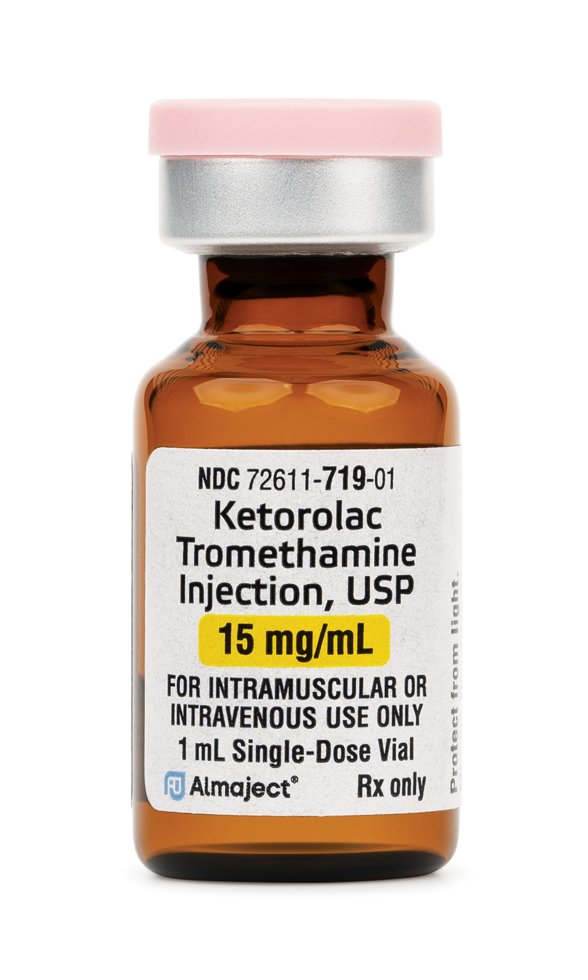
Ketorolac Tromethamine Injection is a sterile, aqueous formulation containing the nonsteroidal anti-inflammatory drug (NSAID) ketorolac tromethamine at a concentration of 15 mg per mL in a preservative-free 1 mL vial intended for single-use parenteral administration. As a member of the heteroaryl acetic acid class, the agent exhibits potent analgesic activity comparable with moderate-dose opioids yet retains the anti-inflammatory and antipyretic properties characteristic of prostaglandin G/H synthase (cyclo-oxygenase) inhibitors. The injectable preparation is distributed through an FDA-registered 503B outsourcing facility that operates under current good manufacturing practice (cGMP) requirements, providing prescribers with a ready-to-administer product when commercial supply interruptions or individualized dosing requirements necessitate compounded alternatives.
Clinicians employ the medication for short-term management of moderately severe acute pain following surgical and nonsurgical procedures, usually in hospital or ambulatory surgery center settings where parenteral dosing allows rapid onset of analgesia and reduces reliance on systemic opioids. Despite its efficacy, therapy is deliberately restricted to a maximum cumulative duration of five days in adults because prolonged systemic exposure is associated with a rising incidence of gastrointestinal bleeding, renal dysfunction, and cardiovascular adverse events. Because platelet aggregation is reversibly inhibited for approximately 24 hours after each dose, practitioners must weigh hemorrhagic risk when planning neuraxial anesthesia or postoperative anticoagulation. Proper patient selection-including avoidance in those with active peptic ulcer disease, advanced renal impairment, uncontrolled bleeding disorders, or hypersensitivity to aspirin-like drugs-optimizes the benefit-to-risk profile.
The vial contains 10 % ethanol and isotonic sodium chloride in water for injection; pH is adjusted to 6.9-7.9 with sodium hydroxide or hydrochloric acid. No bacteriostatic agents are present, so unused solution should be discarded.Clinical use is limited to adults ≥17 years because safety and efficacy data in pediatric and chronic pain populations remain insufficient. Prescribers are reminded that compounding does not confer FDA approval and that each prescription must be patient-specific or covered by a valid office-use agreement compliant with state and federal regulations.
For adults 17 years and older weighing ≥50 kg with normal renal function, the recommended initial intramuscular dose is 60 mg once, followed by 30 mg every 6 hours as needed, not to exceed 120 mg in 24 hours. Intravenous bolus dosing is 30 mg every 6 hours with the same daily maximum. Patients ≥65 years, those weighing <50 kg, or those with mild renal impairment should receive half these amounts-30 mg IM or 15 mg IV initially, then 15 mg every 6 hours, with a 60 mg total daily ceiling.
The combined duration of parenteral and any subsequent oral or intranasal ketorolac must not exceed five consecutive days to limit serious toxicity. No pediatric dosing is approved. In severe pain settings, ketorolac may precede a reduced opioid dose, but scheduled, around-the-clock administration rather than on-demand use maintains consistent plasma concentrations and avoids end-of-dose failure. Renal function, hemoglobin concentration, and signs of bleeding should be evaluated daily. Dose adjustments are mandatory for creatinine clearance <50 mL/min, and therapy is contraindicated if clearance falls below 30 mL/min.
Ketorolac’s principal pharmacodynamic effect derives from competitive, reversible inhibition of the cyclo-oxygenase isoenzymes COX-1 and COX-2, thereby blocking the conversion of arachidonic acid to prostaglandin H2, the obligate precursor of pro-inflammatory prostaglandins, prostacyclin, and thromboxanes. Although the racemic mixture has similar total plasma clearance, the S-enantiomer contributes the majority of analgesic potency through high-affinity binding to the COX active site. Peak analgesia follows intravenous or intramuscular administration within 30 to 60 minutes, with a terminal elimination half-life averaging 5.3 hours in healthy adults. Protein binding exceeds 99 %, and the compound distributes into synovial fluid where sustained COX blockade correlates with continued pain relief. Hepatic metabolism, primarily via CYP2C9-mediated hydroxylation and glucuronidation, yields inactive metabolites that are renally excreted.
Because COX-1-derived thromboxane A2 supports platelet aggregation and gastrointestinal mucosal integrity, nonselective inhibition explains the agent’s propensity to prolong bleeding time and erode gastric defenses. Conversely, COX-2 inhibition attenuates peripheral sensitization and central nociceptive transmission, accounting for the opioid-sparing analgesic benefits observed in controlled trials. The drug does not interact with μ-opioid receptors, and it exhibits no intrinsic sedative or respiratory depressant activity. Preclinical models demonstrate analgesic synergy between ketorolac and local anesthetics, supporting multimodal postoperative pain protocols. Investigations into enantioselective pharmacokinetics reveal slower clearance of the R-enantiomer, but clinical efficacy is predominantly linked to the S-form, underscoring the mechanistic rationale for limiting duration rather than escalating dose. Importantly, ketorolac does not significantly inhibit the lipooxygenase pathway and therefore does not raise leukotriene concentrations implicated in aspirin-induced asthma, yet bronchospasm remains possible in NSAID-intolerant individuals.
Use of ketorolac tromethamine is contraindicated in patients with known hypersensitivity to NSAIDs, especially those who have experienced asthma, urticaria, or allergic-type reactions after aspirin exposure, because fatal anaphylactoid responses have been reported. Active peptic ulcer disease, recent gastrointestinal hemorrhage or perforation, and a history of recurrent ulceration preclude therapy, as does cerebrovascular bleeding or patients at high risk for hemorrhage including peri-operative coronary artery bypass graft surgery. The injectable formulation is contraindicated in labor and delivery because prostaglandin inhibition may adversely affect fetal circulation and uterine contractility. Advanced renal impairment (serum creatinine >2.5 mg/dL) or volume depletion increases the likelihood of NSAID-induced renal failure; thus, ketorolac must be avoided or used with extreme caution and dose reduction.
Concomitant use with aspirin, other NSAIDs, probenecid, or pentoxifylline heightens gastrointestinal and bleeding toxicity and represents an absolute or relative contraindication. Patients on anticoagulant therapy, those with hemostatic disorders, or incomplete hemostasis should not receive the drug. Pediatric patients, patients requiring chronic analgesia, and those with inflammatory arthritis are excluded because risk outweighs benefit. Finally, intrathecal or epidural administration is strictly prohibited due to alcohol content and risk of neurotoxicity.
Pharmacodynamic and pharmacokinetic interactions necessitate vigilance during ketorolac therapy. Co-administration with other NSAIDs or high-dose salicylates produces additive cyclo-oxygenase inhibition, compounding gastrointestinal erosion and platelet dysfunction. Probenecid markedly reduces renal clearance of ketorolac, doubling systemic exposure and prolonging half-life; concurrent use is therefore contraindicated. Anticoagulants, direct oral anticoagulants, and antiplatelet agents such as clopidogrel synergistically extend bleeding time. Selective serotonin reuptake inhibitors may impair platelet aggregation via serotonin depletion, further elevating hemorrhagic risk.
Methotrexate clearance may fall when NSAIDs compete for renal tubular secretion, increasing marrow and hepatic toxicity. Lithium excretion is similarly diminished, predisposing to neurotoxicity. Renally-eliminated angiotensin-converting-enzyme inhibitors and angiotensin receptor blockers, when combined with ketorolac and diuretics, form a pharmacologic ‘triple whammy’ that can precipitate acute kidney injury in susceptible individuals. Opioid analgesics exhibit pharmacodynamic complementarity, permitting reduced opioid dose; nonetheless, ketorolac lacks cytochrome induction or inhibition potential, so metabolic interactions are minimal. Practitioners should stagger intramuscular injections at different sites when corticosteroids are prescribed to mitigate additive myopathy.
Adverse events associated with ketorolac align with the NSAID pharmacologic class yet occur with greater frequency when therapy exceeds the recommended five-day limit. The most serious reactions are gastrointestinal bleeding, ulceration, and perforation, which can present without prodromal dyspepsia. Clinically significant postoperative hemorrhage, hematoma formation, and epistaxis have been observed, reflecting reversible platelet inhibition. Renal events include elevations in serum creatinine, oliguria, interstitial nephritis, and, rarely, nephrotic syndrome.
Cardiovascular events, such as hypertension, edema, and in rare cases myocardial infarction or stroke, appear related to prostaglandin imbalance and fluid retention. Central nervous system complaints-headache, dizziness, drowsiness-are usually transient. Dermatologic eruptions range from mild rash to severe exfoliative dermatitis and Stevens-Johnson syndrome. Elevated hepatic transaminases occur in up to 1 % of recipients but seldom progress to fulminant failure. Injection-site pain or burning is reported in roughly 20 % of intramuscular doses. Most adverse effects dissipate after cessation, yet life-threatening bleeding mandates immediate intervention.
Ketorolac crosses the placenta and, like other NSAIDs, may induce premature closure of the fetal ductus arteriosus if administered after 30 weeks’ gestation; it can also impair fetal renal perfusion as early as the second trimester, producing oligohydramnios and neonatal renal insufficiency. Accordingly, the agent is classified as category C prior to 30 weeks and category D thereafter.
Epidemiologic studies do not show a clear association with teratogenicity in early pregnancy, yet data are insufficient to exclude risk, and alternative analgesics with superior maternal-fetal safety profiles are preferred.
During labor, inhibition of prostaglandin-mediated uterine contractions may prolong gestation and increase postpartum hemorrhage. Limited quantities have been detected in breast milk; although adverse neonatal events are unlikely after short courses, nursing mothers should monitor for feeding difficulties or bleeding manifestations.
The drug should be avoided in fertility treatments because COX inhibition may interfere with implantation. Obstetric consultations are recommended when inadvertent exposure occurs.
Store Ketorolac Tromethamine Injection vials at controlled room temperature 20 °C to 25 °C (68 °F to 77 °F). Protect from light by retaining vials in the carton until time of use, and discard solution that appears cloudy, displays particulate matter, or develops pronounced yellow discoloration. Freezing may cause precipitation and should be avoided. The formulation is physically and chemically stable for 24 hours after dilution in normal saline or 5 % dextrose for intravenous infusion, but aseptic technique and prompt administration remain prudent. Because the product is preservative-free, any residual volume must be disposed after single patient use.